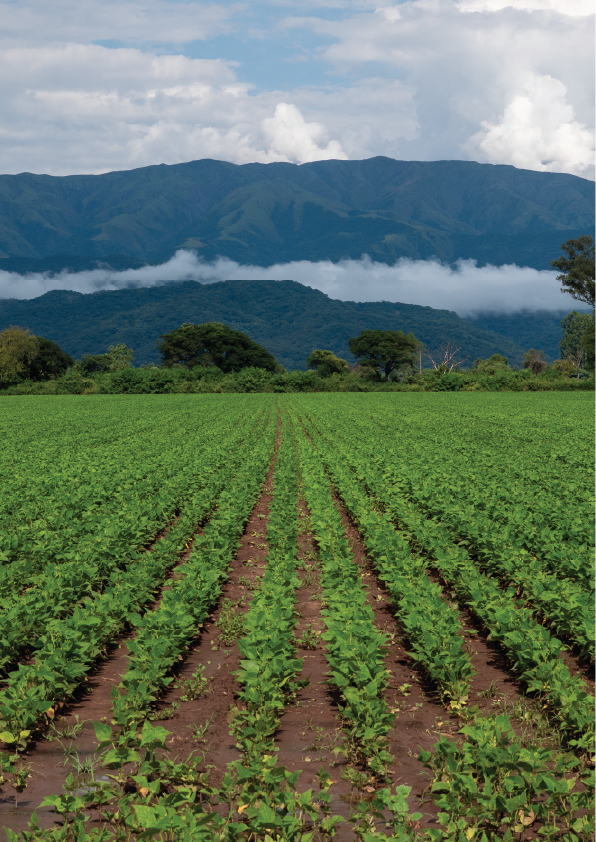
Sustainable land use as part of new production models
The Protected Productive Landscape (PPP) program is an innovative initiative that promotes the valorization and active management of these ecosystems by the private sector
In 2024, Honduras took a historic step toward providing assistance to families and people who go missing along migration routes toward Mexico and the United States. Through a coordinated initiative involving stakeholders from civil society, intergovernmental organizations, and the government, a missing migrant search protocol was developed, and a bill was drafted to provide legal protection for missing persons and their family members.
In April, the Honduran government presented the first Missing Migrant Search Protocol, which incorporates mechanisms for inter-institutional coordination, calls for the creation of a case database, and establishes a legal framework based on respect for human rights. In addition, it outlines the responsibilities of the Honduran government when it comes to searching for, locating, and identifying missing persons and recognizes the rights of these persons and their families, including the right to an immediate search, truth, justice, repair of harm, and non-repetition. It is worth noting that the Missing Migrant Search Protocol calls for searches to be carried out outside the country, particularly in Mexico and Guatemala, making use of transnational collaboration mechanisms. Precedents for this include the Mexican Foreign Support Mechanism (Mecanismo de Apoyo Exterior, or MAE), created in 2019.
The protocol is the result of a long process that took over 10 years, driven by committees made up of the families of missing persons with support from civil society organizations and inter-governmental agencies. Organizations like the International Committee of the Red Cross (ICRC), Fundación para la Justicia y el Estado Democrático de Derecho, Comité de Familiares de Migrantes Desaparecidos de El Progreso, Yoro (COFAMIPRO), and Central America and Mexico Migration Alliance (CAMMINA) worked together on this issue, promoting the formation of networks and implementing transnational collaborative processes to search for missing persons. This effort also involved institutions like Equipo Argentino de Antropología Forense (EAAF), an organization specialized in the search, recovery, identification, and return of the remains of disappeared people. In addition, the ICRC provides guidance and ongoing assistance in these processes.
Fundación Avina has been instrumental in expanding social capital, facilitating coordination between COFAMIPRO and six other committees made up of the families of missing migrants in Honduras.
Fundación Avina, in conjunction with other stakeholders, played a crucial role in developing shared action agendas and coordinating advocacy efforts concerning the bill and the Missing Migrant Search Protocol. Our capacity for building bridges between the government, civil society, and international aid sectors boosted the collective ability to effect change. In addition, our involvement was key in supporting innovation, such as the annual DNA collection workdays organized by EEAF, introducing new methodologies to address the issue of disappeared migrants. The unifying vision promoted by Fundación Avina also enabled us to align the efforts of a wide range of stakeholders around a common objective: establishing a legal framework to provide comprehensive assistance to families in the search for missing migrants.
This is the result of a joint effort and demonstrates a commit- ment to human rights. The protocol not only guarantees the right to truth and justice, it also provides mechanisms for the repair of harm and the non-repetition of these crimes.