Renewable energy to ensure safe water in the Amazon
Federal government’s program has officially incorporated the use of solar panels for community water supply in isolated Amazonian communities
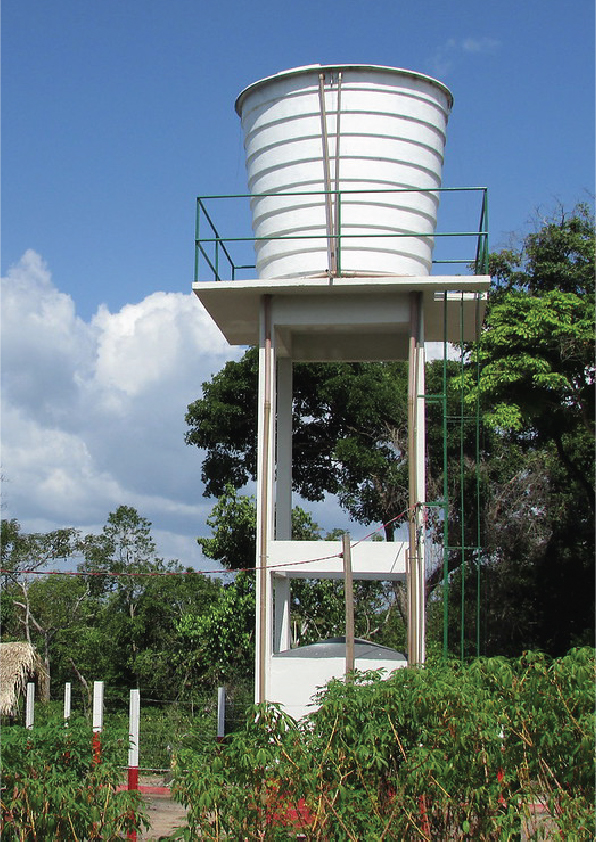
Initially, community water systems implemented through Brazil's Cistern Program in the Amazon operated using diesel generators. This fuel, in addition to being expensive and polluting, had to be transported by river and stored under precarious conditions in isolated communities, posing constant risks. Access to safe water was limited and depended on costly and unreliable fuel supply chains.
To address these challenges, the Cistern Program of Brazil's Ministry of Social Development and Assistance, Family, and Fight Against Hunger (MDS) formally incorporated, through the Regulatory Guidelines of the National Secretariat for Food and Nutritional Security (SESAN/MDS), the use of off-grid solar panels—operating independently from the conventional electricity grid—to power community water supply systems in the Amazon. With this decision, pumping systems no longer depend on diesel or gasoline generators, reducing costs, fuel storage risks, and polluting emissions.
Fundación Avina played an important role in the transition to solar energy in the region. Since 2015, we have invested, along with Xylem and The Coca-Cola Foundation, over 700 thousand USD in the Brazilian organization Projeto Saúde e Alegria (PSA) to install 50 solar-powered water supply systems. This support has helped improve the performance of off-grid systems and significantly reduce community maintenance costs.
In addition, Fundación Avina helped connect PSA and the MDS, leading to an alliance in 2018 that named PSA as the implementing organization for the MDS cistern program in the Amazon. Avina's contribution can be understood across three dimensions: innovation, by promoting the use of solar energy in remote contexts; social capital, by strengthening PSA's role in mobilizing communities, local organizations, and government actors; and advocacy, by influencing the adoption of solar energy within federal public policy for water access.
This shift not only transforms daily life in Amazonian communities, but also sets a precedent in public policy for sustainable access to safe water. The progress is particularly significant in a region where more than one million people still lack basic water and energy services. Historically, isolated communities such as Santarém, Belterra, Itaituba, Óbidos, and Oriximiná depended on river transport of fuel to operate their water systems—an expensive and unsafe practice.
Since 2018, PSA, based in Santarém, has implemented the Cistern Program's social technologies in the region, directly benefiting 1,239 families across 50 communities, 20 of which already included solar-powered pumping systems. These experiences demonstrated that it is possible to reduce diesel use by up to 90%, and were instrumental in prompting the MDS to update four regulatory frameworks, establishing solar-powered pumping systems. The Cistern Program includes eight social technology models adapted to different Amazonian contexts, such as upland and floodplain communities. Today, PSA is implementing 1,293 solutions across Santarém, Óbidos, and Oriximiná, in a process that continues to expand across the Amazon, marking an important step toward sustainable energy and reliable access to safe water.