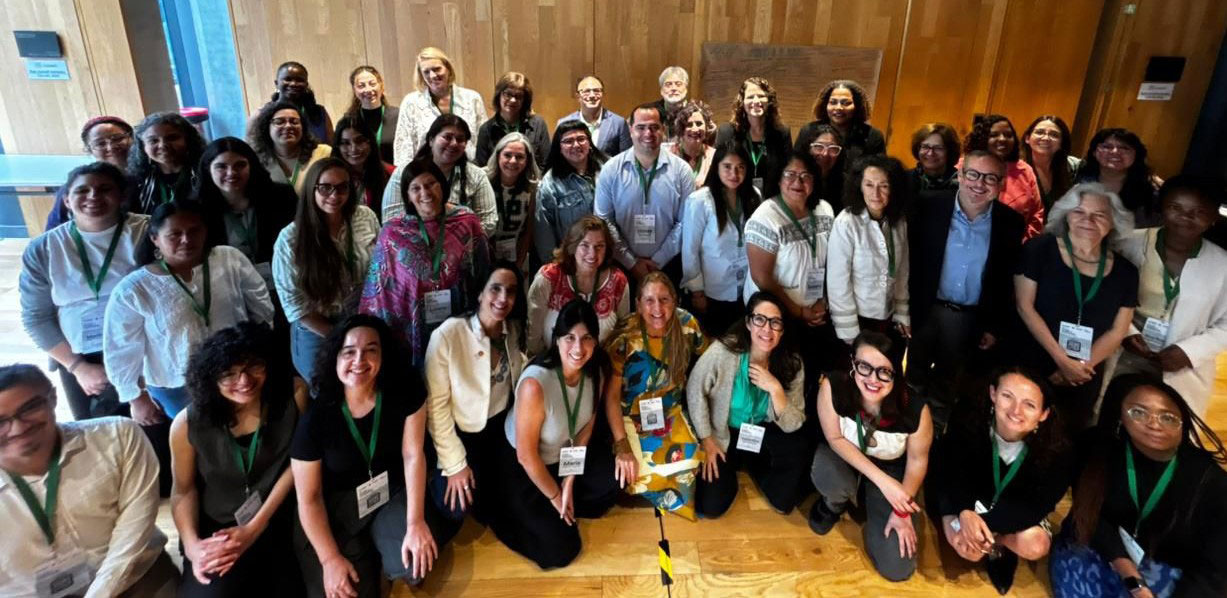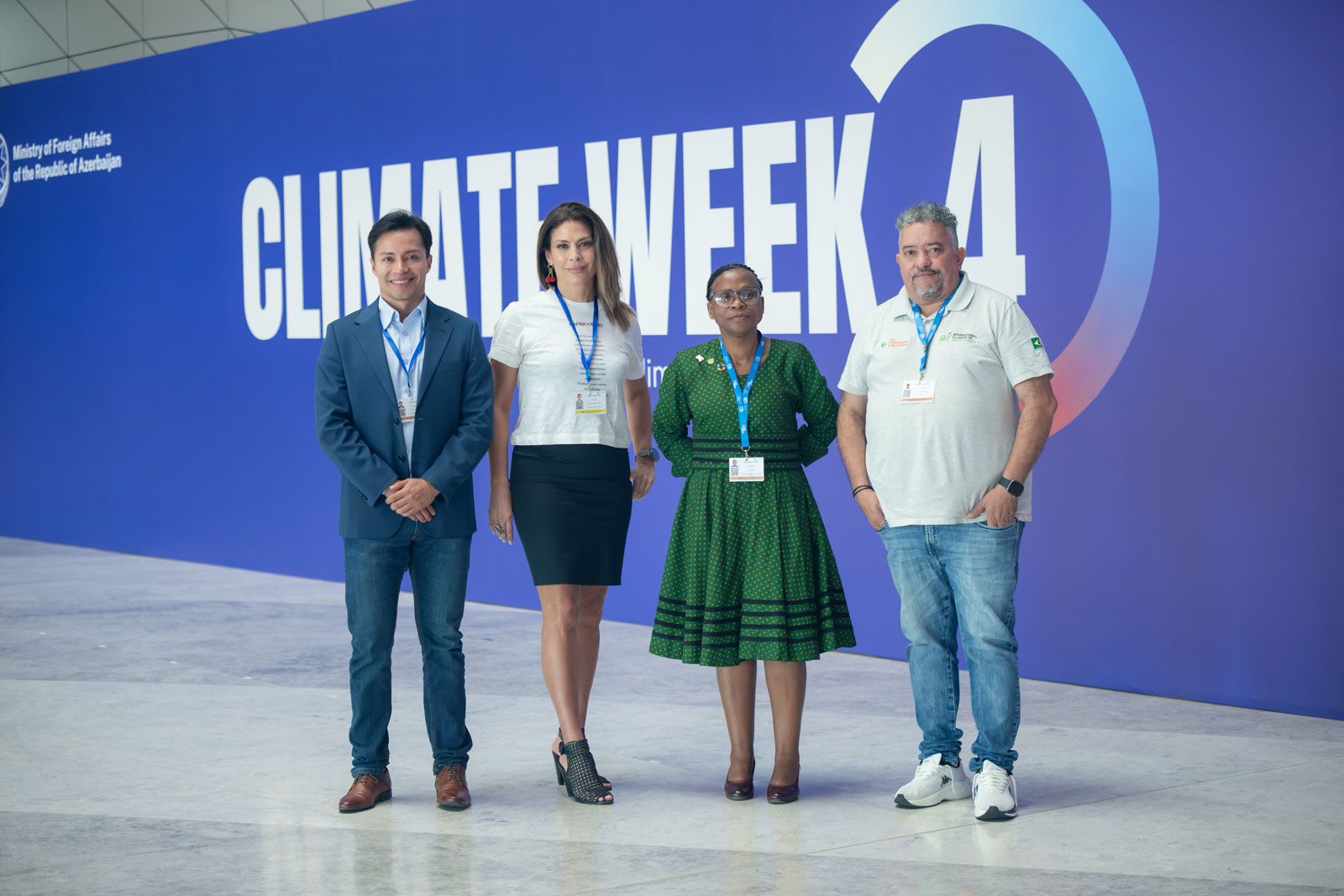
Alejandro Mejia, Romina Malagamba Otegui, Maditlhare Koena, and Severino Lima Jr, representing the Tonelada Justa initiative at the Climate Week of the United Nations Framework Convention on Climate Change, held in Baku, Azerbaijan.
Tonelada Justa was part of the debate during the Climate Week of the United Nations Framework Convention on Climate Change, held in Baku, Azerbaijan, from September 7 to 11. The methodology recognizes the contribution of inclusive recycling to climate action, quantifying the polluting emissions avoided through this work.
Developed with the participation of Fundación Avina, this innovative solution emerges in a context in which more than 2 million waste pickers in Latin America and the Caribbean sustain more than 50% of the global material recovery effort. It is estimated that, on average, they avoid 1.45 tons of CO₂e for every ton of recovered plastic. Despite this contribution, the work of waste pickers still faces challenges related to measurement, recognition, and data generation, which limits access to climate finance mechanisms. This lack of visibility contrasts with a compelling territorial reality: waste picker organizations reach communities, materials, and territories where conventional waste management infrastructure often fails to reach. Far from being peripheral actors, they constitute a distributed climate infrastructure that already generates environmental, social, and economic results at scale.
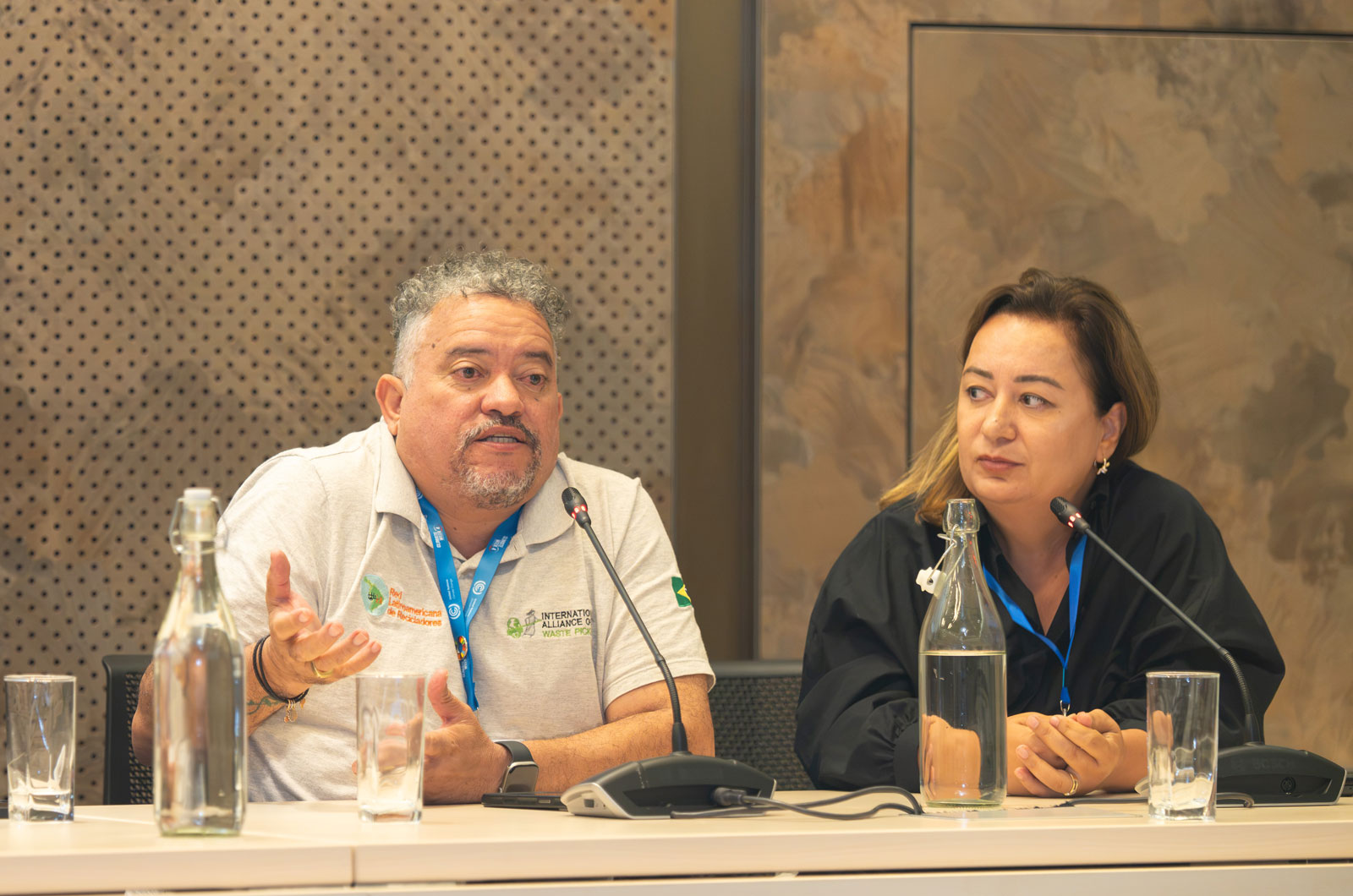
Severino Lima Jr, representing the Red Latinoamericana y del Caribe de Recicladores
Created to respond to this challenge, Tonelada Justa combines science and local knowledge to calculate and give visibility to the contribution of waste pickers toward a more inclusive and just circular economy. The methodology, which we developed together with the International Alliance of Waste Pickers, Red Latinoamericana de Recocladores, and Global Methane Hub, supports cooperatives through a process that starts with informal records and progresses toward the production of auditable and comparable data. It thus becomes a triple-impact tool: social, economic, and environmental. More than a measurement tool, Tonelada Justa seeks to demonstrate that climate action driven by waste picker organizations can produce reliable data, mobilize financing, and scale solutions with global impact from the territories.
During the event in Baku, efforts were made to advance the validation of the initiative together with governments and sector actors, discuss pathways to integrate the emissions avoided through waste pickers’ work into Nationally Determined Contributions (NDCs), and mobilize catalytic financing to expand the platform. The discussion also made it possible to position a strategic question for the global climate agenda: how to transform evidence produced from communities into institutional recognition and financing flows capable of scaling existing solutions.
The goal is to bring Tonelada Justa to more than 100 organizations in Latin America, Asia, and Africa, strengthening the capacity of cooperatives and waste picker organizations to produce recognized data and demonstrate their contribution to addressing the climate crisis.
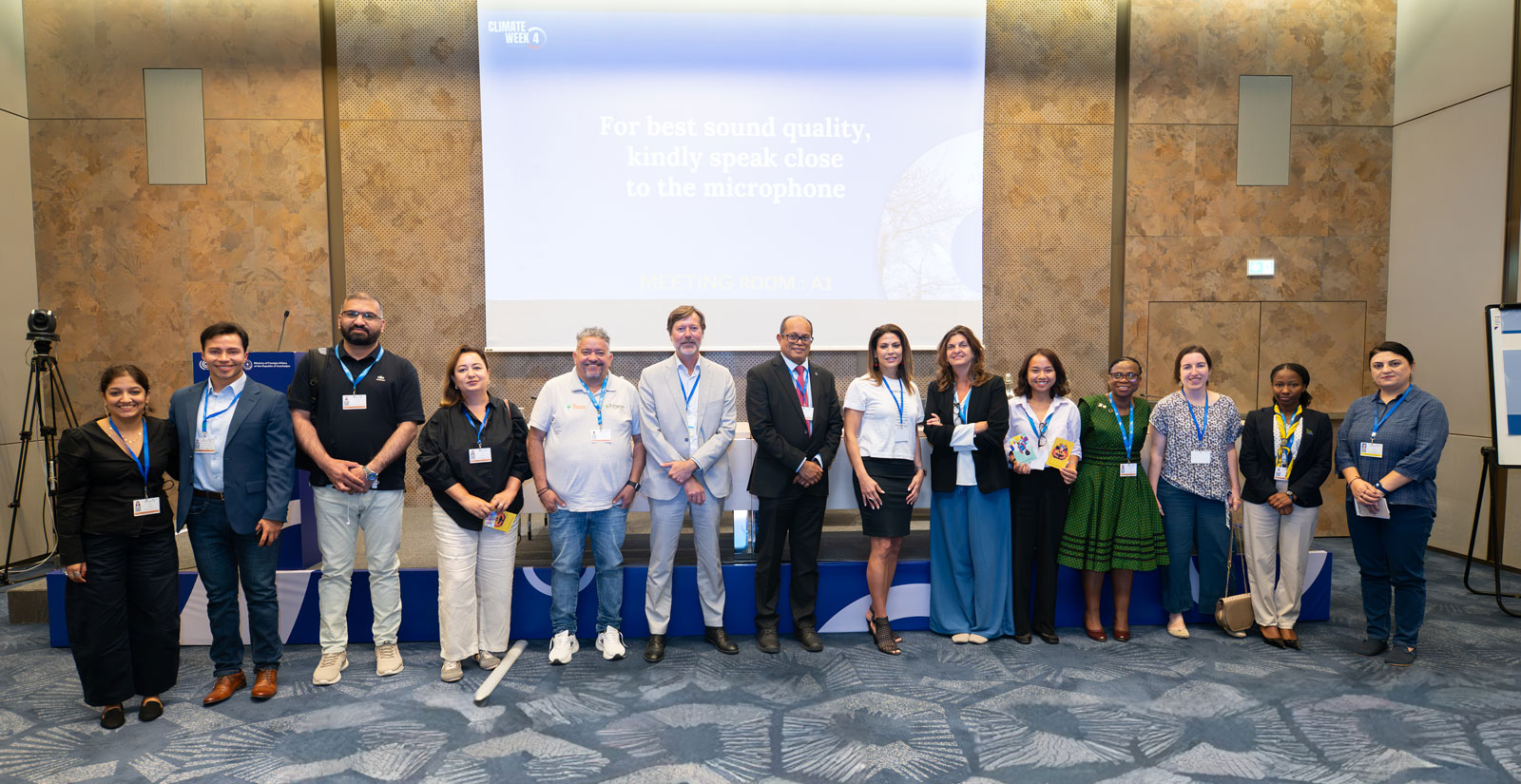
Climate Week 4 FAIR TON: Making Waste Pickers’ Climate Action Count.
For Fundación Avina, participation in this initiative is part of its commitment to building collaborative solutions capable of generating systemic transformations. Avina has been contributing to the development and articulation of innovative solutions on the inclusive circular economy agenda, promoting mechanisms that make it possible to translate the impact generated in the territories into evidence, recognition, and access to financing. The goal is to accelerate systemic transformations through collaboration among waste picker organizations, governments, the private sector, and actors on the global climate agenda.