Adaptation policies that reduce climate risk
Ecuador presented its first National Adaptation Plan and reaffirmed its commitment to climate change adaptation and the protection of people and ecosystems.
Many countries have yet to develop and implement national adaptation plans to identify and assess the negative effects of climate change and come up with measures to manage and mitigate them.
In the case of Ecuador, despite adopting a National Climate Change Strategy in 2012 that called for creating a National Adaptation Plan, the government had made little progress toward developing one.
Following a collaborative process involving a wide range of sectors that began in 2019 and concluded in 2023, the Ecuadorian government, through the Office of the Deputy Secretary for Climate Change within the Ministry of Environment, Water, and Ecological Transition (MAATE), presented its first National Climate Change Adaptation Plan (known as the PNA) for 2023-2027. The plan is a key tool for building resilience, reducing climate risks, and increasing adaptation capacity in areas of the country that are facing adverse effects of climate change. With the enactment of the PNA, Ecuador is making progress not only toward fulfilling its commitments before the United Nations Framework Convention on Climate Change (UNFCCC), it is also establishing guidelines to protect the most vulnerable ecosystems and sectors of society.
The plan provides critical information for designing adaptation measures, including climate projections and hydrometeorological data. One example of the plan's impact is on the food production sector, which is one of the most vulnerable to climate change. The sector now has specific measurement tools in place, since the PNA was developed at the same time as the Regulatory Framework for Measurement, Reporting, and Verification to enable the country to evaluate progress and refine climate change adaptation strategies.
Fundación Avina participated in the development of the PNA as an advisor and by facilitating the collective construction of contextual intelligence, positioning, and a strategic vision.
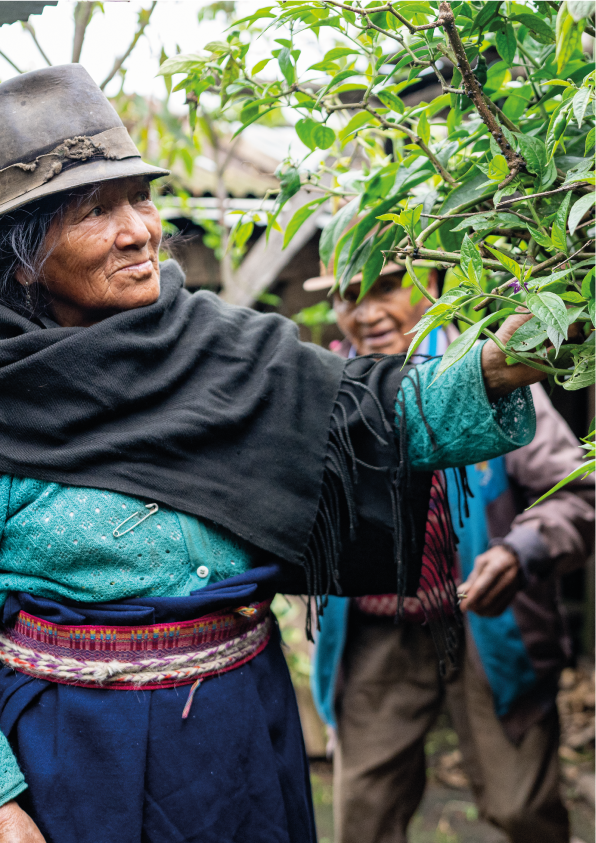
On a technical level, Fundación Avina made key contributions to the plan and the general climate adaptation strategy by a) conducting a climate risk study examining food sovereignty, agriculture, aquaculture, and fishing, and b) providing input, along with other stakeholders, to develop the Regulatory Framework for Measurement, Reporting, and Verification for the agricultural sector. These contributions were important to understanding the areas where household and rural village farms are prevalent. The vulnerability of these small-scale farms previously had little visibility in prior climate policy instruments.
Now Ecuador has an indispensable regulatory framework in place to ensure local economic planning is geared toward building resilience and solidifying an inclusive and sustainable development model.