Inclusive innovation to reduce poverty
A Paraguayan methodology transforming lives in more than 50 countries
The tool was created in 2009 in response to a concrete question from Fundación Paraguaya : how could it know whether its programs were truly helping Paraguayan families rise out of poverty? Coming up against the limitations of traditional indicators, the organization developed the Poverty Stoplight, a multidimensional tool designed to capture families' own perceptions of their situation. Its methodology, based on respect, listening, and action, is now being used in indigenous communities, urban neighborhoods, informal settlements, and rural areas, adapting to diverse cultural contexts in collaboration with more than a thousand partner organizations and businesses.
Fundación Avina played a strategic role in both the development and the consolidation and expansion phases of the Poverty Stoplight. Avina supported the research process for the design of the tool through funding and by connecting Fundación Paraguaya with regional partners with relevant knowledge and experience, strengthening the methodological approach through innovation and social capital. It also supported a pilot application of the tool in northern Argentina, which led to technical improvements. Fundación Paraguaya is a longstanding partner of Fundación Avina, with whom it has advanced multiple collaborative initiatives over several decades.
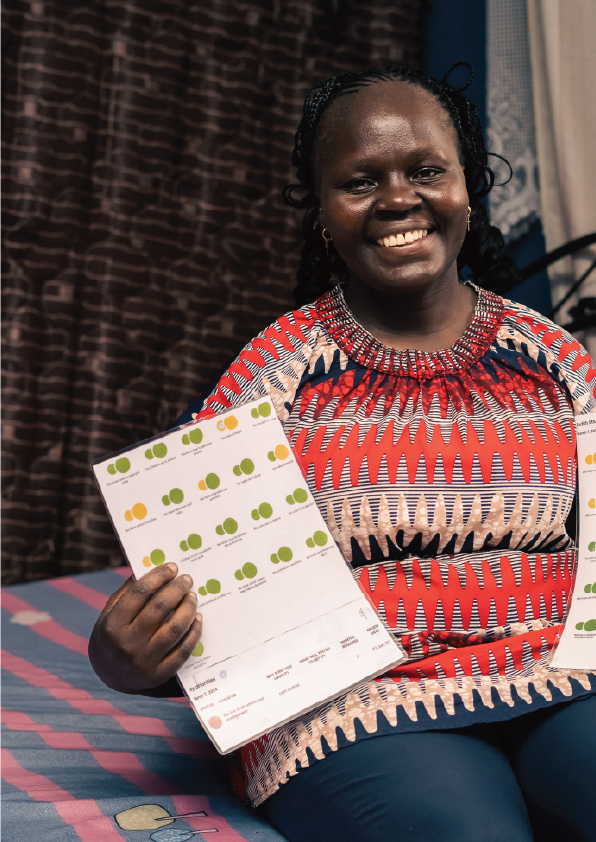
The Poverty Spotlight uses a color-coded system—green (no deficiency), yellow (deficiency), and red (extreme deficiency)—to help families to measure, visualize, and self-manage their living conditions with 50 indicators across 6 categories of wellbeing, placing them in the driver's seat of their own development. Between 2009 and 2024, the Stoplight was adapted for use in 59 countries in close collaboration with 800 partner organizations and businesses. 516,400 families have used it to not only to assess their problems, but also come up with personalized action plans. The Stoplight also activates community networks, sparks inter-institutional collaboration, and provides important insights for developing training, credit, and support programs.
The exponential growth in use of the tool (635% in 5 years) points to its usefulness and its capacity for scalability and adaptation to different contexts, and its impact is tangible. A 2024 study of 20,000 women entrepreneurs in Paraguay that used the Stoplight and participated in Fundación Paraguaya's microfinance programs showed that extreme poverty fell from 10% to 3% in one year and that income-related poverty dropped from 54% to 33%. Similarly, a 2022 Friendship Bridge study of families that used the Stoplight in Guatemala showed that poverty indicators went down by an average of 4%. Other studies in South Africa and Argentina also showed significant reductions in red indicators, with equivalent increases in yellow and green indicators. The tool's effectiveness has been proven in contexts as wide-ranging as rural areas of Africa, low-income urban neighborhoods in the United States, indigenous communities in Latin America, and Romani settlements in Eastern Europe. The Stoplight has been translated into 25 languages, won over 40 international awards, and has been recognized by institutions like the Miller Center for Social Entrepreneurship at Santa Clara University in California.
Foto: © Fundación Paraguaya