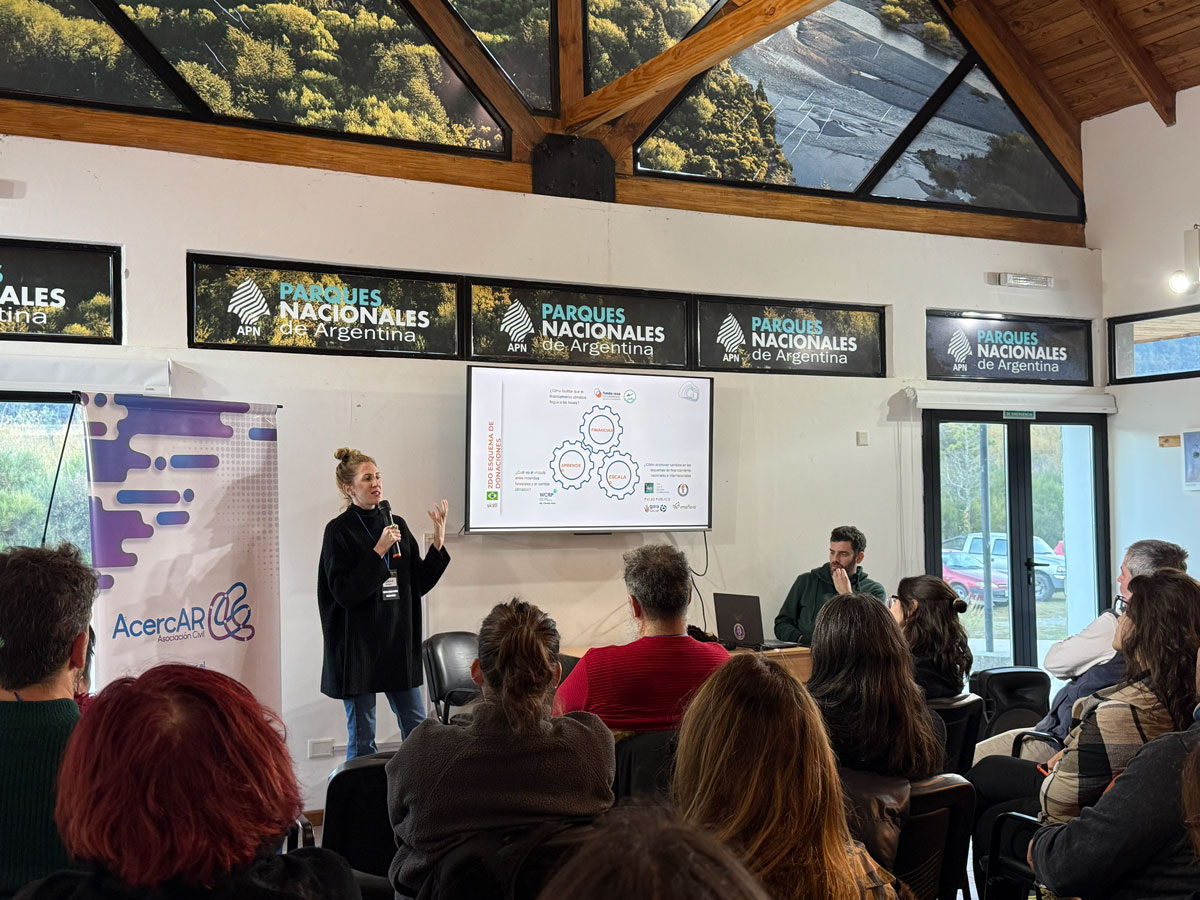
On May 21, the workshop “From Information to Action: Communicating Wildfires in a New Climate Context in Northern Patagonia” took place in Lago Puelo, creating a space for dialogue on how to communicate wildfires before, during, and after emergency situations.
As a philanthropic organization committed to advancing collaborative solutions to Latin America’s social and environmental challenges, Fundación Avina, through the BASE Initiative, joined forces with Fundación Alimentaris and Asociación Civil AcercAR to develop an initiative aimed at strengthening the connections between science, communication, and local territories in response to the growing wildfire risk in Northern Patagonia.
The event sought to contribute to a broader conversation about wildfires and their impacts, addressing not only emergency response but also the importance of coordination among stakeholders, the circulation of reliable information, territorial collaboration mechanisms, and the social and emotional impacts experienced by communities.
BASE – Building Approaches to fund local Solutions with climate Evidence
At Fundación Avina, we articulate collaborative initiatives to generate impact. One of these initiatives is BASE (Building Approaches to fund local Solutions with climate Evidence), which promotes broader and more qualified access to climate finance for local communities by simplifying the production of relevant, clear climate evidence connected to territorial realities. It was through BASE that the workshop was developed.
Earlier this year, through this alliance, we launched the report “Climate change and wildfires in Northern Patagonia, Argentina: Evidence of a new climate regime increasing wildfire risk”, which shows that the climate regime in the region has already changed. This is not a temporary fluctuation: conditions now favor more severe and recurring wildfires. Therefore, climate evidence clearly shows us that prevention and response can no longer continue to be based on assumptions from 20 or 30 years ago.
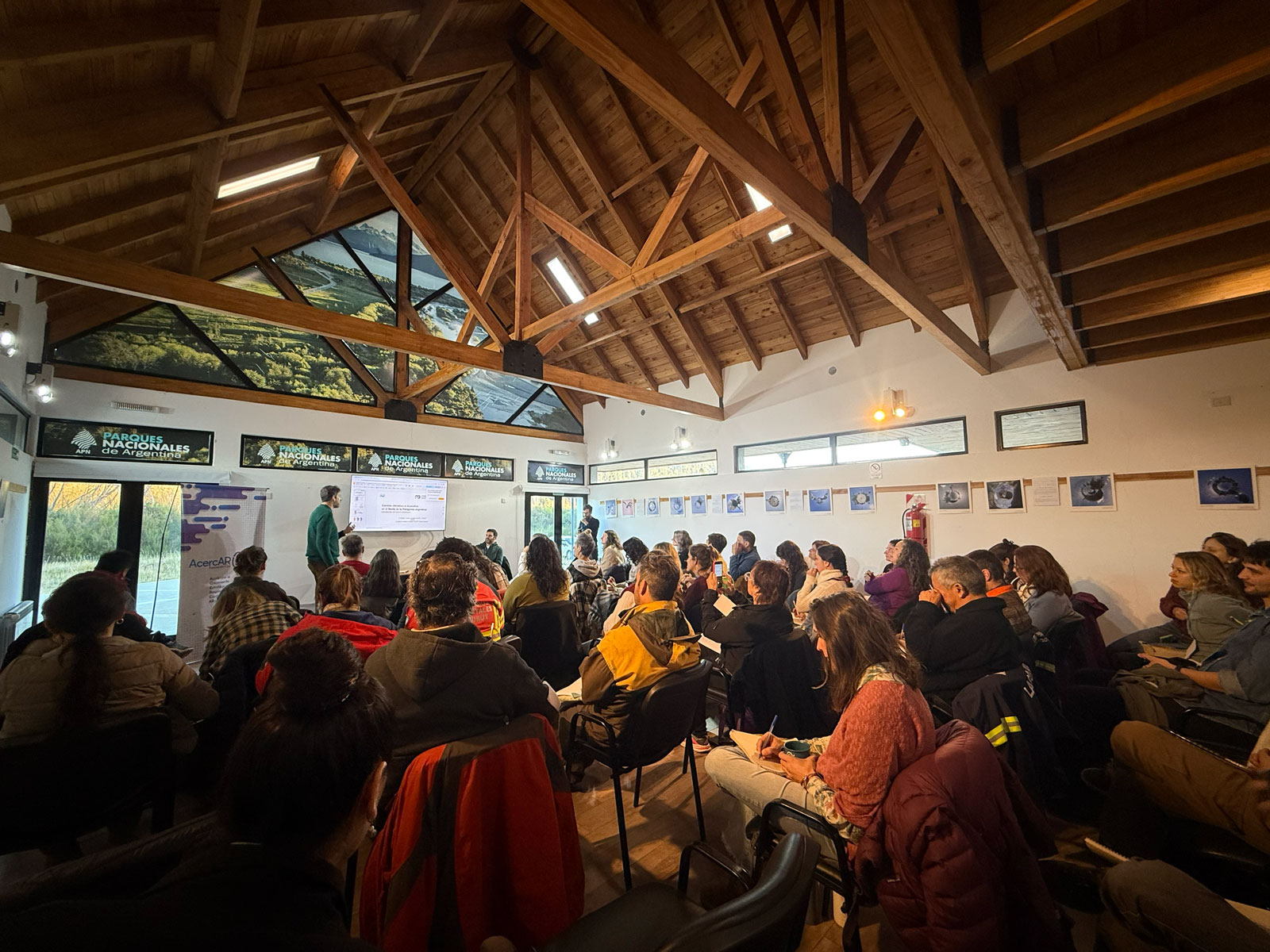
Photo © Marcos Huisman, 2026