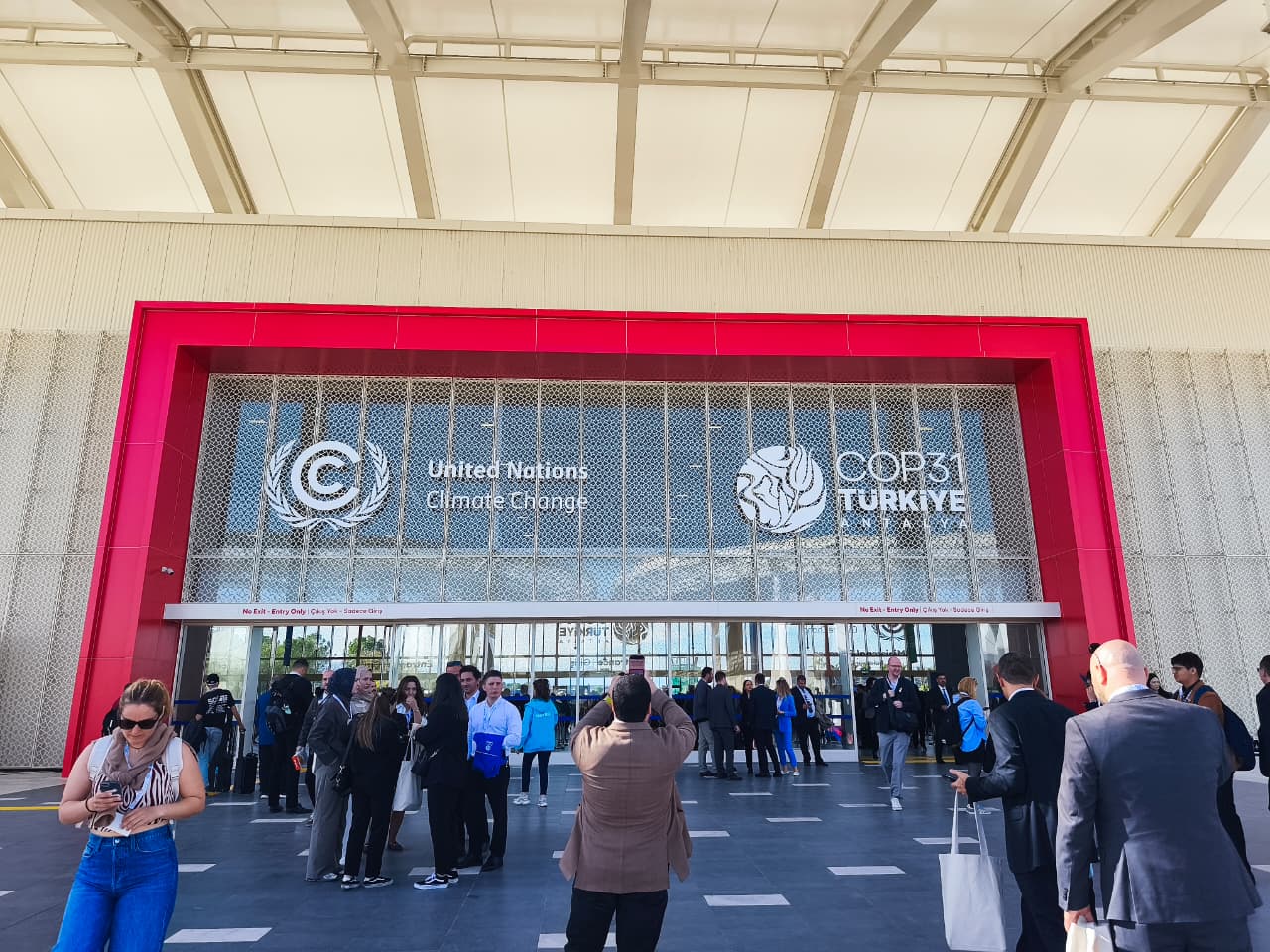
From November 9 to 20, Antalya hosts what has been called the “implementation COP.” Fundación Avina arrives with a clear message: climate solutions are already happening in the territories, and the challenge is to recognize, finance and scale them quickly.
In this post:
Avina at COP
World-Transforming Technologies
Our Agenda
A year ago, COP30 in Belém placed the Amazon and Latin America at the center of the climate conversation. For many organizations in the region, it was a home COP. COP31, held in Antalya (Türkiye), with Australia presiding over the negotiations and a strong agenda from Pacific countries, poses a different challenge: ensuring that the perspectives, solutions and priorities of Latin America, the Caribbean and the Global South remain present where decisions are made.
The context is not simple. Multilateralism is going through a moment of weakness, international funding for the climate agenda has shrunk, and many civil society organizations face dwindling resources and deep exhaustion. At the same time, COP31 opens the second Global Stocktake of the Paris Agreement and focuses on something the Global South has been calling for for years: turning commitments into concrete, measurable results.
Avina at COP31: From ambition to implementation
As an organization born in the Global South, Avina starts from one certainty: climate action does not begin in international negotiations, but in the territories. Communities, Indigenous peoples, women, youth, waste pickers, workers and local governments are already implementing solutions that strengthen resilience, protect nature and transform economies.
For these solutions to scale and endure, they need accessible financing and local leadership; climate governance that turns participation into real influence and accelerates implementation; and the recognition of care as part of climate justice, as included in the Belém Gender Action Plan.
Implementing climate commitments will depend not only on resources or technology, but also on the ability to build lasting social agreements and to offer a desirable and achievable vision of the future: safer territories, fair access to energy and essential services, decent work, and communities with decision-making power. Hope mobilizes when it is connected to possible changes and concrete results. Avina contributes to this task by connecting territories, social movements, workers’ organizations, governments and the private sector to build shared solutions from the Global South, in favor of human dignity and care for the planet.
World-Transforming Technologies
At the COP31, we’ll be there alongside World-Transforming Technologies, an organization within the Avina ecosystem focused on systemic transformation through science, technology and innovation (STI). WTT arrives at COP31 aiming to advance on two strategic fronts: strengthening international cooperation on climate technologies through the Belém Technology Implementation Programme (BTIP), and connecting the climate agenda with the transformation of food systems. The experience built in Belém reinforced the importance of STI in tackling the climate and ecological crises, highlighting the need to bring together scientific knowledge, public policy, international cooperation and finance. WTT starts from the understanding that a just transition depends on democratizing access to science and technology, strengthening local capacities and creating the conditions for solutions developed in the territories to reach scale and impact. During COP31, the organization will launch the publication Technology and Climate: Pathways to Advance the Implementation of Solutions under the UNFCCC, contributing to the debate on the pathways, challenges and opportunities of international cooperation on climate technologies.
Our agenda
Where we’ll be: events we will attend, take part in or contribute to.
🗓️ First week of the COP | Exhibition space
Together with the UN Global Compact Network Brazil and the World Bioenergy Association (WBA), we will be at the COP31 exhibition space to share knowledge, build networks and showcase the leadership and climate solutions of our region.
Stop by and talk with us!
🗓️ Tuesday, November 10 | 15:00 – 16:00
Bridging the Global South on multilevel adaptation monitoring: Latin American and African experiences in testing and tracking the Belém Indicators
The Belém Adaptation Indicators (BAI) were adopted in Belém as part of the UAE Framework for Global Climate Resilience. The challenge now is to put them into practice and test them, which opens a key opportunity for local and national monitoring to enrich the global assessment and inform the Belém–Addis Vision. This panel brings together pioneering experiences from Latin America and Africa. It will present the technical and capacity-building lessons learned from testing and analyzing the BAI in national and subnational adaptation plans (NAPs) and in monitoring, evaluation and learning (MEL) systems. The session fosters direct South-South dialogue and shows that, by taking into account different multilevel governance structures and local data ecosystems, adaptation tracking can be globally coherent and locally meaningful.
Panelists: Pilar Bueno Rubial (Argentina 1.5), Emilie Beauchamp (IISD), Shouro Dasgupta (CMCC), Dibor Thérèse Faye (Senegal), Fabiana Menna (Fundación Gran Chaco), Elizabeth Robinson (GRI, LSE) and María Gracia Aguilar (Fundación Avina).
🗓️ Tuesday, November 10 | 16:30 – 17:30
Tracking Adaptation Efforts: Emerging Practices on Piloting the Belém Adaptation Indicators (BAI)
Brazil Pavilion
This panel brings together country representatives and partners to share experiences and lessons learned from testing the 59 Belém Adaptation Indicators (BAI) adopted at COP30. Through country presentations and an interactive discussion, it will explore methodological and practical challenges, emerging solutions and peer-learning opportunities. The panel aims to support the operationalization of the Global Goal on Adaptation (GGA), inform the Belém–Addis Vision, and strengthen the link between global adaptation frameworks and their implementation at the national and subnational levels.
🗓️ Wednesday, November 11 | 14:15 – 15:45
Clean Energy Systems: From NDCs to Implementation
Capacity-building Hub
The session will explore the main technical and institutional capacity needs for implementing clean energy commitments. It will also share practical experiences and lessons learned from countries and organizations advancing clean energy deployment, and highlight successful implementation models, partnerships and capacity-building approaches. It also seeks to facilitate knowledge exchange among policymakers, practitioners, technical experts and youth representatives, and to strengthen collaboration among institutions supporting the transition to clean energy and mitigation action.
🗓️ Thursday, November 12 | 14:00 – 15:15
Financing Climate Technologies for Urban and Rural Resilience
UNIDO Pavilion
A dialogue on how to scale up innovative financing for climate technologies that support resilient, sustainable and people-centered communities in the Global South.
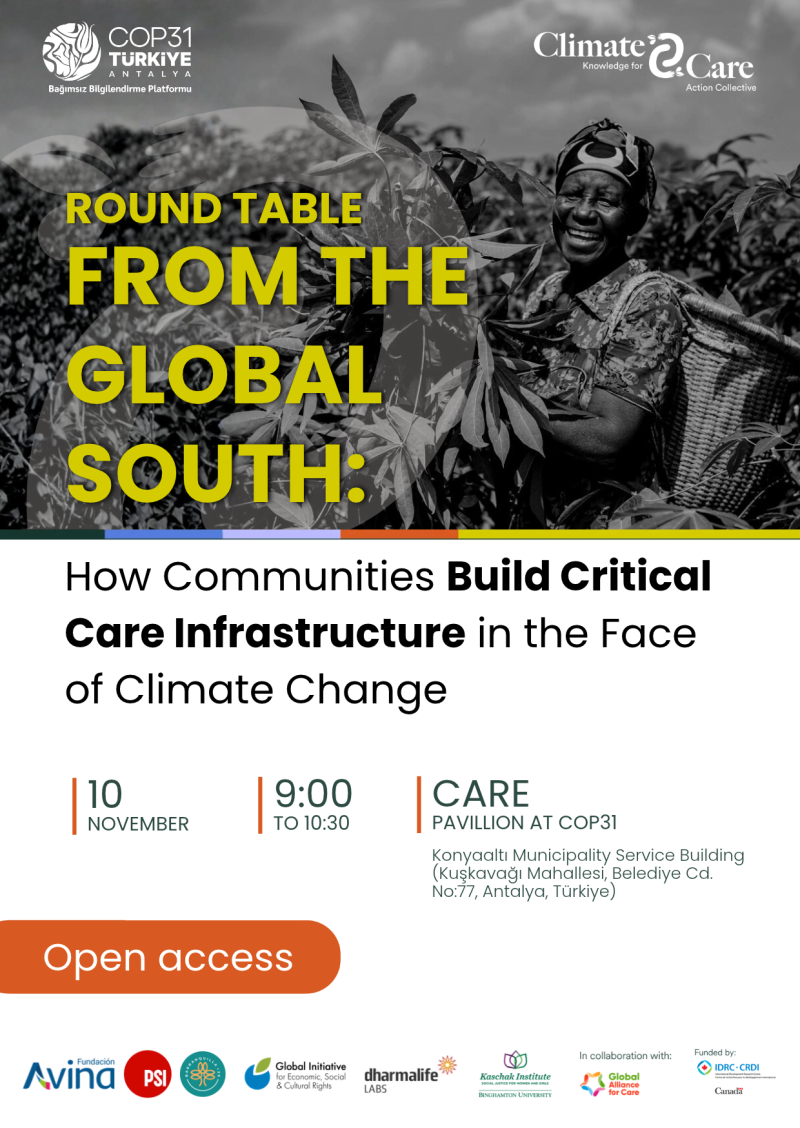 🗓️ Sábado 14 de noviembre | 9:00–10:30
From the Global South: How Communities Build Critical Care Infrastructure in the Face of Climate Change
Care Pavilion
This roundtable brings together civil society organizations, researchers, governments, and international actors from Asia, Africa, Latin America and the Caribbean to explore how communities across the Global South are building and sustaining critical care infrastructure in response to climate change. Drawing on evidence, policy engagement, and practice from the Climate and Care Colelctive and its partners, the session will examine how climate risks deepen existing inequalities, why care is essential to adaptation and resilience, and how community experiences can inform more inclusive climate policies. Moving from evidence to action, participants will identify opportunities to strengthen collective advocacy so that care is recognized, valued, and financed within NDCs, National Adaptation Plans and other climate mechanisms, culminating in the Antalya Call, a set of shared messages to advance care as a central component of climate action.
🗓️ Saturday, November 14 | 10:45 – 12:45
Recognizing Care as Infrastructure: Financing Women-Led Green Entrepreneurship
Care Pavilion
Organized by: TnT Follow Taxes
🗓️ Saturday, November 14 | 13:00
WTT: Launch of the publication Technology and Climate: Pathways to Advance the Implementation of Solutions under the UNFCCC
Climate Cooperation Lounge, Blue Zone
WTT presents a publication that contributes to the debate on the pathways, challenges and opportunities of international cooperation on climate technologies. Drawing on the experience built in Belém, it highlights the importance of science, technology and innovation in tackling the climate and ecological crises, and the need to bring together scientific knowledge, public policy, international cooperation and finance.
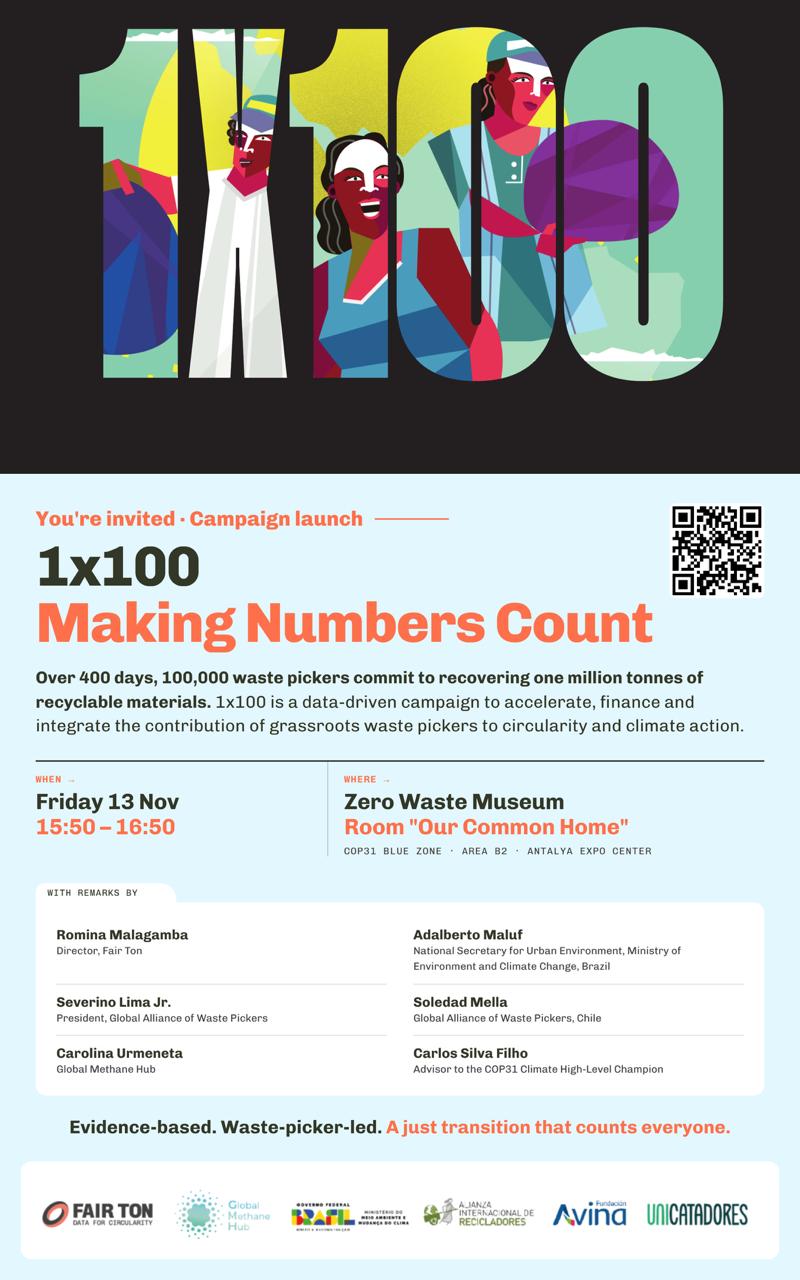 Friday, November 13 | 15:40 – 16:40
Turn Your Luck into Climate Action: launch of the 1×100 campaign
Zero Waste Pavilion, Our Common Home space
Fair Ton launches the 1×100 campaign in a panel bringing together government, philanthropy and the waste picker movement. Speakers include Adalberto Maluf, National Secretary for Urban Environment and Environmental Quality at Brazil’s Ministry of Environment and Climate Change; Carolina Urmeneta, Director of the Waste and Circular Economy Program at the Global Methane Hub; Carlos Silva, from the Zero Waste Foundation; Severino Lima Júnior, President of the International Alliance of Waste Pickers (IAWP); Soledad Mella, President of the National Association of Grassroots Recyclers of Chile (ANARCH); and Romina Malagamba, Director of Fair Ton. The launch will be covered by the COP’s communications and press team.
Workshop with journalists: the Fair Ton | 19:00 – 21:00
A working session with journalists to raise awareness of the Fair Ton
Saturday, November 14 | 11:30 – 12:30
From the Ground Up: People at the Center of a Just Transition
Just Transition Pavilion
This panel addresses the environmental, health and economic inequalities faced by communities, workers and small businesses, and examines tools such as insurance, inclusive finance and participatory planning. With representatives from the energy sector and small-scale rural producers, the panel brings together the diversity of voices that the just transition conversation needs today.
🗓️ Saturday, November 14 | 16:45 – 18:15
Bridging scales of action: how to link LLA to GGA to unlock resilient futures?
Side Event Room 9 – Safranbolu
This event presents lessons from Asia, Africa and the Americas on partnerships rooted in the reality of those who suffer the most from climate impacts. Four organizations with more than 160 years of combined experience will share how they drive radical collaborations that catalyze action across knowledge systems, cultures and scales in the Global South.
Panelists: María Gracia Aguilar (Fundación Avina), Lisa McNamara (SouthSouthNorth), Pablo Lloret (Fundación Futuro Latinoamericano), Shobhakar Dhakal (Asian Institute of Technology) and Graces Chine Ngai Yan (Singapore Management University)
🗓️ Monday, November 16 | 10:00 – 11:00
WTT: Rebalancing South-South cooperation on climate technology: possibilities, challenges and gaps
Regional Climate Foundations (RCF) Pavilion
Achieving ambitious climate action depends not only on access to climate technologies, but on developing countries’ ability to develop, adapt, manufacture and deploy them. This panel examines how South-South cooperation can help rebalance international arrangements on climate technology, addressing the possibilities, challenges and gaps developing countries face in building productive and technological capacity. The UNFCCC and the Belém Technology Implementation Programme (BTIP) provide the primary institutional anchor for the discussion, but the panel will also look beyond them to other forums of international governance — including trade, finance and industrial policy — where South-South technology cooperation could be advanced. The panel will also discuss what role Northern governments, institutions and funders can play in strengthening — rather than substituting for — South-South cooperation, and in supporting new paradigms of technological collaboration among developing countries. Bringing perspectives from Latin America, Africa, Asia and Europe, and from civil society and research institutions already implementing solutions, the panel will identify the political and institutional conditions needed for more equitable and autonomous technological cooperation among developing countries.
Panelists: Hina West, Climate Strategies; Thais Jesinski Batista, World-Transforming Technologies (WTT); Shimukunku Manchishi, African Futures Policy; and AMAN (tbc). Moderator: Yago Freire, LACIMA.
🗓️ Monday, November 16 | 11:30 – 14:30
Climate Action Agenda
Brazil Pavilion, Global Mutirão Room
An event coordinated by the Climate and Clean Air Coalition (CCAC) in the space the pavilion dedicates to connecting solutions from governments, businesses, cities and civil society. Fair Ton joins the conversation on how to accelerate climate action across sectors.
Tuesday, November 17 | 14:30 – 15:30
🗓️ What’s Next for Real Economy Climate Action Data at the UNFCCC?
UN Climate Change Pavilion
Organized by the UNFCCC Transparency Division, this panel discusses the future of data on real economy climate action. Fair Ton presents its experience as one of the leading cases selected from the thousands of initiatives registered on NAZCA, the UN Global Climate Action Portal, and shares ongoing work to incorporate its methodology for grassroots organizations into the platform, so that what happens on the ground becomes part of the global picture of climate action.