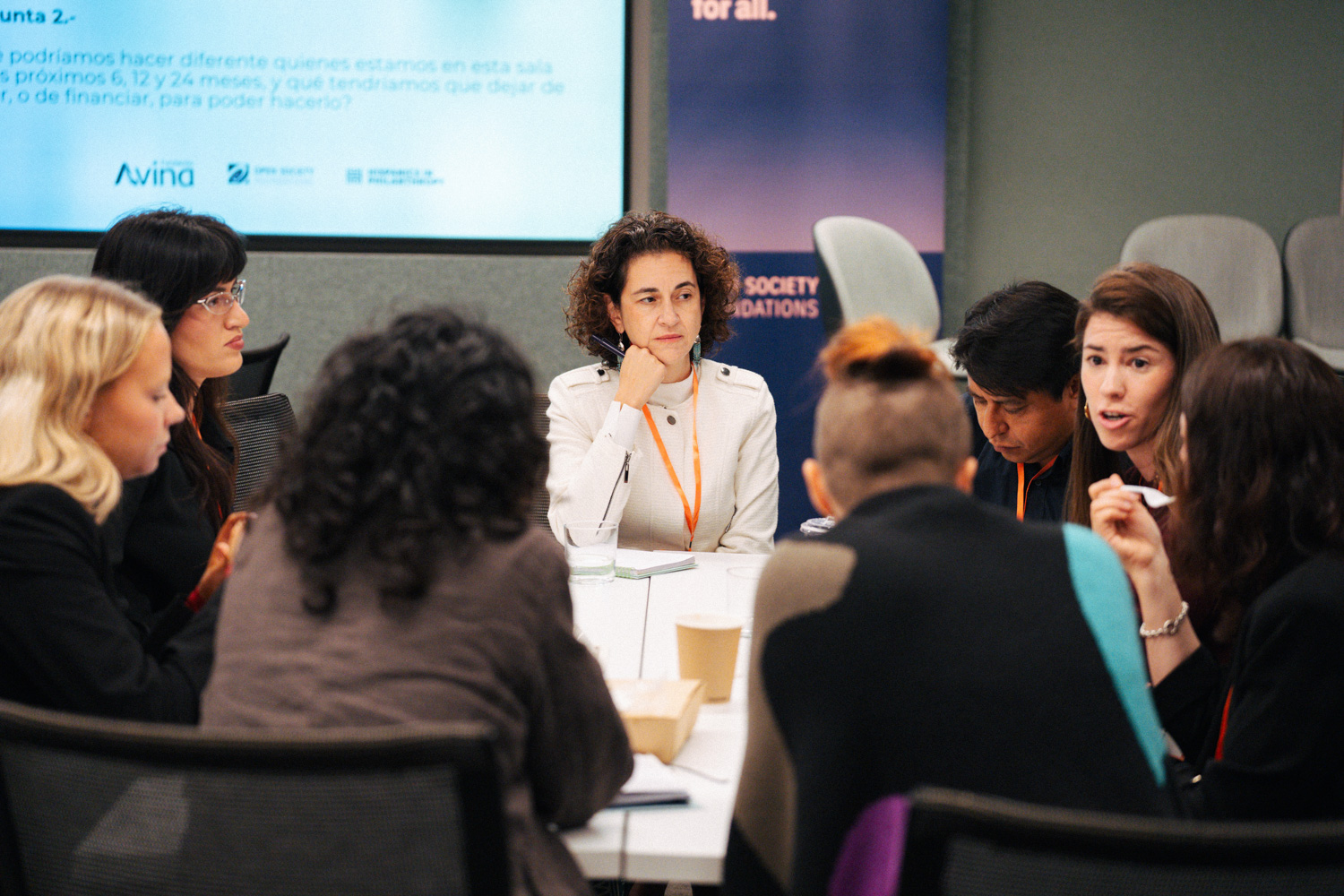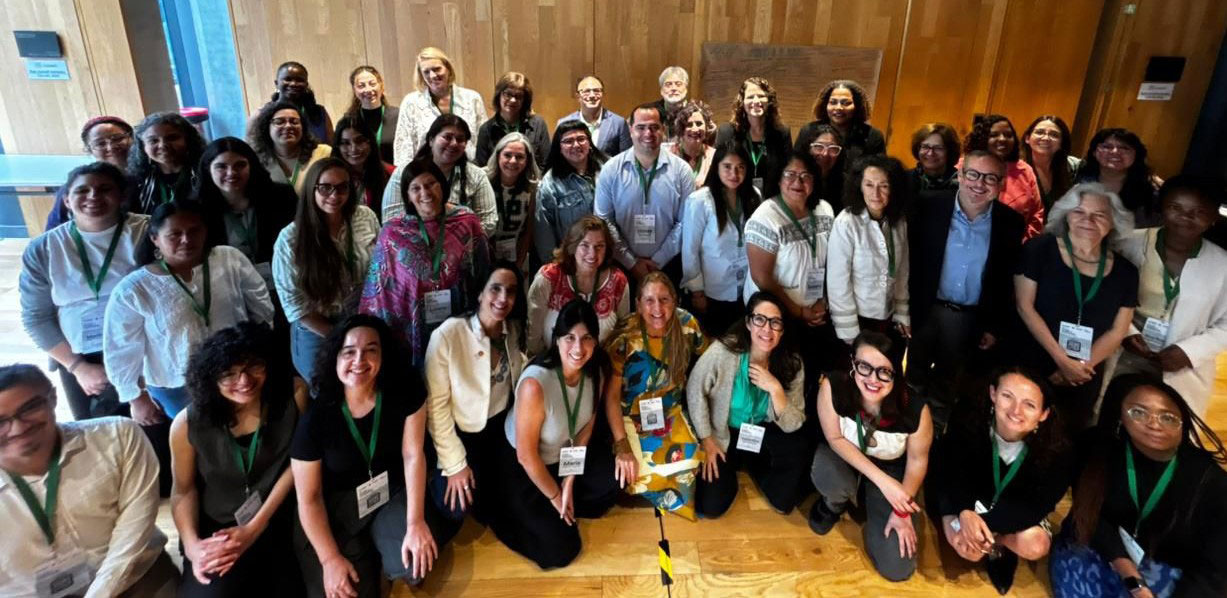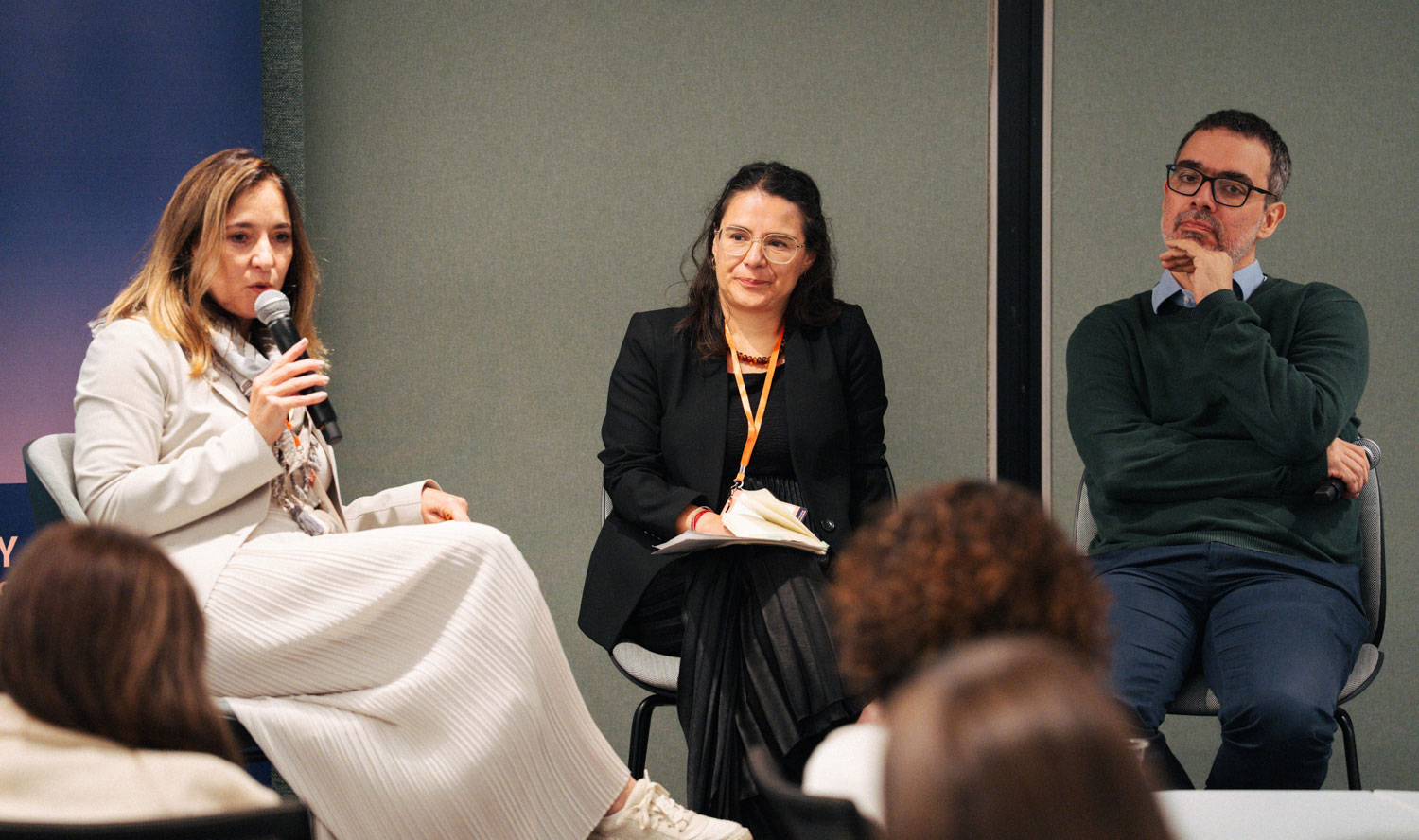
Pilar Parás (Mexican Center for Philanthropy, Cemefi), Valeria Scorza (CEO of Fundación Avina) and Pedro Abramovay (Vice President of Programs at Open Society Foundations). Panel “Connecting Philanthropic Strategies Across the Americas: From Latin America, toward a shared agenda for civic space and democratic resilience”, organized by Fundación Avina, Open Society Foundations and Hispanics in Philanthropy.
The week in New York that brings together the United Nations General Assembly (UNGA) and New York Climate Week was, as usual, intense. The Assembly took place at a time of financial, security and international cooperation challenges for the UN, yet the week still retained its mobilizing spirit and the engaged presence of representatives from different sectors.
In the climate arena and throughout the Climate Week discussions, an increasingly intersectional view of the climate emergency gained momentum. It has become ever more difficult, or at least naïve, to address climate in isolation from other agendas intrinsically linked to it. Care is a case in point. In environmental disasters, such as those recorded in Nepal or the floods in Brazil, care workers are on the front line, supporting affected people and seeking pathways for adaptation and resilience-building. “The care agenda is taking on an increasingly important role in the climate discussion. We have learned that there is no climate resilience without care: health and care workers sustain communities before, during and after every crisis. It is time to recognize care as essential infrastructure for adaptation,” said Agnieszka Raczynska of Fundación Avina’s Labor Innovation program.
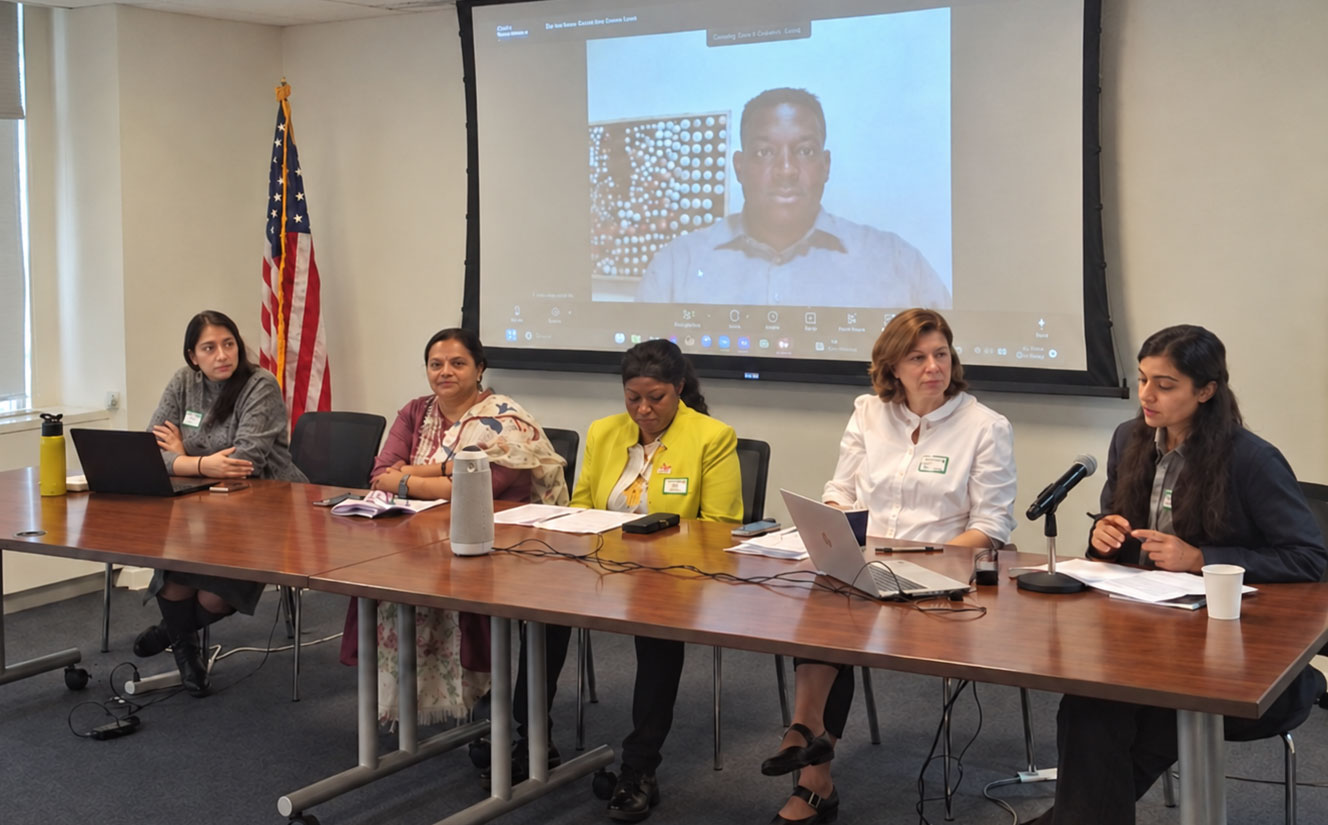
Panel “Frontline Defenders: Health, Worker Rights, and Care in a Changing Climate”, with Prutha Vyas (Senior Coordinator at the Self-Employed Women’s Association, SEWA), Flandersia Jones, DrPH, RN (Board Director of the New York State Nurses Association, NYSNA), Sonia Mistry (Director of Climate and Labor at the Solidarity Center) and Agnieszka Raczynska (Labor Innovation Program Manager at Fundación Avina).
Another key topic was the energy transition and critical minerals, a context in which Latin America holds a central position in the global reconfiguration. The region holds around 46% of the world’s lithium reserves, 35% of its copper, 28% of its graphite and 23% of its rare earths, minerals essential to the renewable energy supply chain, as well as new frontiers of oil and gas exploration and production. These are strategic resources for countries’ economies, sovereignty, national defense and energy transition. “The new frontier of the global energy transition is in Latin America and the Caribbean. The decisions made today will define how the new extractive wave unfolds here. That is why we are betting on convergence to double financing for a just energy transition in Latin America,” highlighted Paula Ellinger of Fundación Avina’s Social Innovation Directorate. According to the organization, regional collaboration in the current geopolitical context can become an engine of energy sovereignty, which is key to ensuring economic sustainability.
Across different spaces, it became clear that Latin America has the infrastructure and the organizations to be at the forefront of the energy transition challenge. This installed capacity, however, operates on increasingly adverse ground, marked by democratic backsliding and a sharp decline in global funding for the region. In this regard, the debate on democracy in Latin America also gained ground during UNGA and Climate Week, as countries in the region face tense elections, shrinking civic space and challenges in sustaining and supporting civil society organizations. Against this backdrop, the nexus between democracy, philanthropy and impact featured in a number of discussions and panels. “Democracy is a fundamental condition for the other transformations philanthropy seeks, whether social, environmental or technological, to take place,” said Anaid Alcazar of Fundación Avina’s Democracies Program. According to her, the share of philanthropic funding directed toward strengthening democratic contexts is still very small, and that needs to change.
Despite the challenges, there were also spaces where a discourse of hope is gaining strength, as a counterpoint to the catastrophist narrative that tends to lead to paralysis. The data point toward the possibility of change. Amid tensions and opportunities, New York Climate Week reinforced that the future of the climate agenda will depend on intersectionality and on structural responses that bring together issues such as climate, care, energy and democracy.