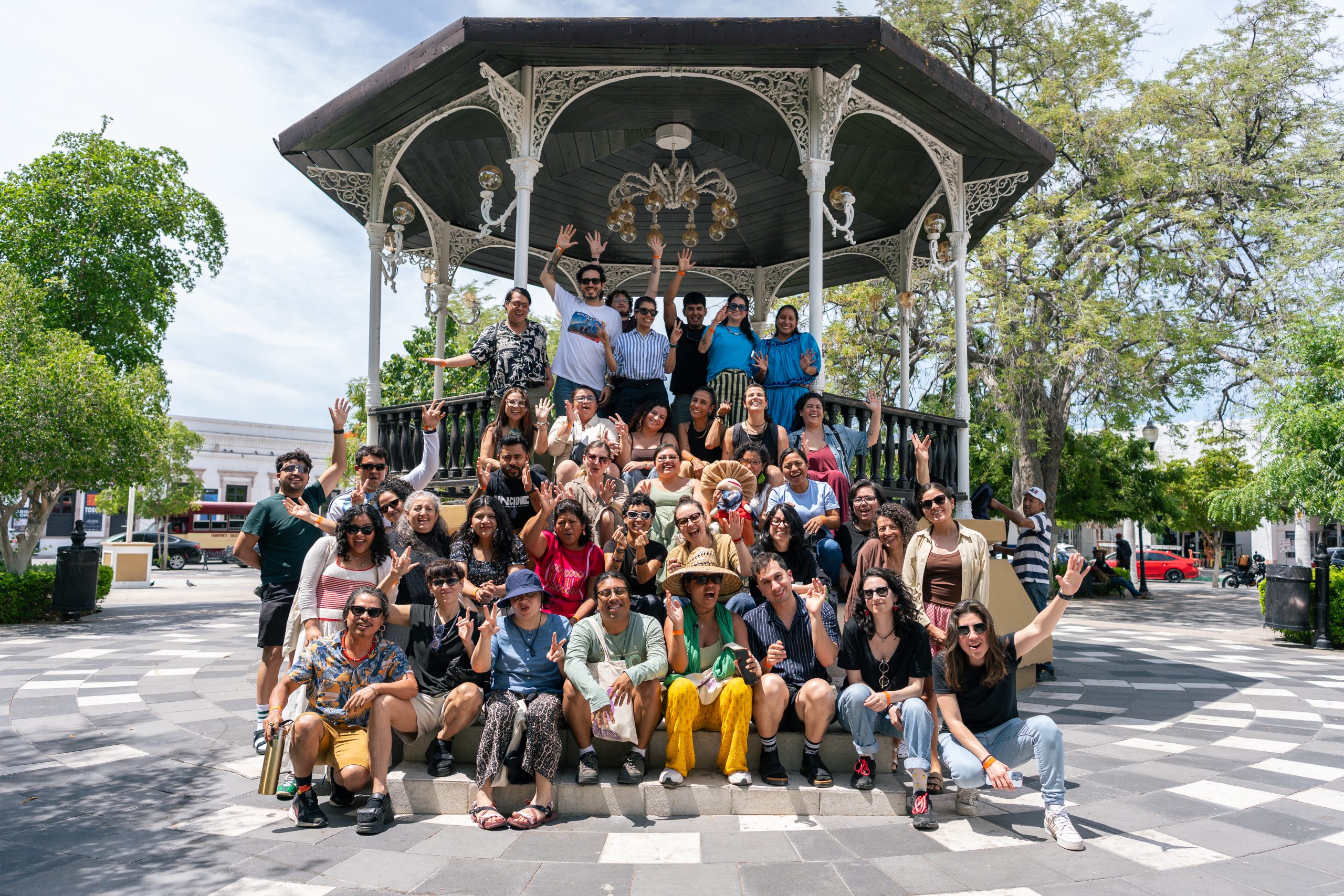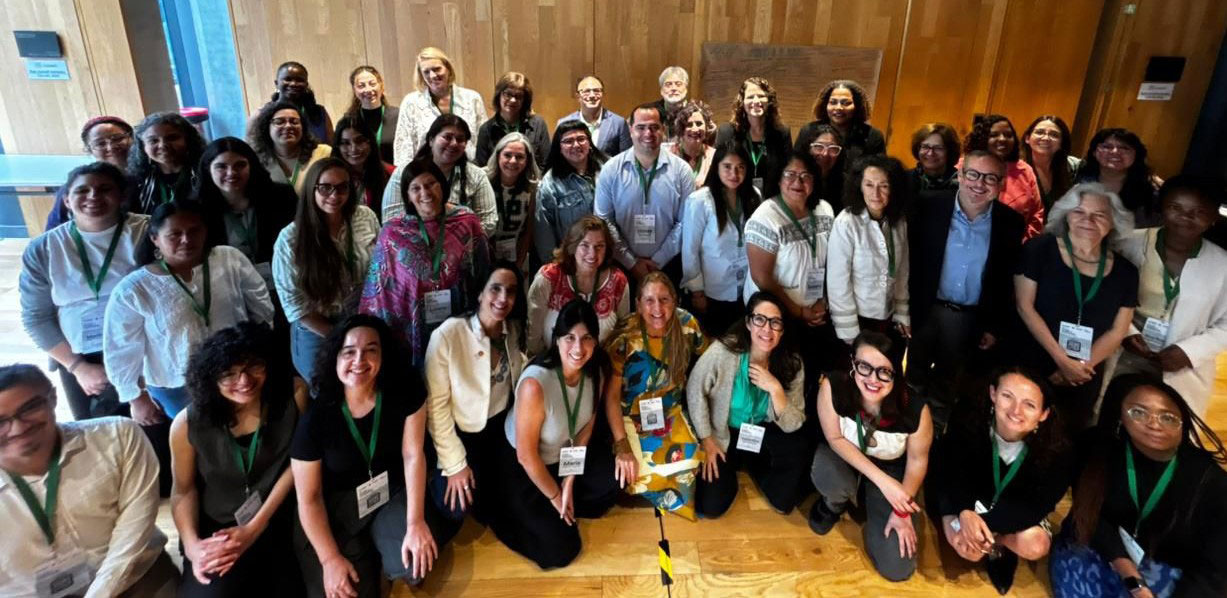
From August 31 to September 2, the meeting Climate and Care: Experiences from the Global South took place in Mexico City, a space for exchange, learning, and collective construction that brought together 45 participants from 19 countries to strengthen a common agenda at the intersection of climate change and care. We drove the meeting together with CLACSO, the National Autonomous University of Mexico (UNAM), Trenzando Cuidados, the Global Alliance for Care, and the Climate and Care Initiative, convened by Canada’s International Development Research Centre (IDRC), bringing together civil society organizations, academia, international bodies, and representatives from various regions of the Global South.
During the first two days of the meeting, the organizations sought to build a common future from different latitudes based on evidence from studies and projects. Among them are the Barranquilla+20 Foundation (Colombia), the Women’s Rights Center of Chiapas and Women and Environment (Mexico), Muungano Rural Empowerment Centre (Kenya), REACH Caribbean Hub on the Climate and Care Nexus (Caribbean), Kaschak Institute for Social Justice for Women and Girls (United States), Policy Center for the New South (Morocco), Public Services International (Ecuador), Aga Khan University for Social Justice for Women (Kenya), DharmaLife Foundation (India), UNRISD, as well as research teams from the University of the Witwatersrand in South Africa and the Universidad de San Martín in Argentina.
These experiences made it possible to identify common challenges, emerging evidence, and opportunities to strengthen collective advocacy around climate and care.
“After several years of IDRC’s frontier investment in the Climate and Care Initiative (CCI), and more recently with the creation of regional hubs to continue this work, this meeting represents a key opportunity to consolidate a global community of practice and advocacy around the climate and care agenda. Bringing together research, leadership, policy, and financing helps transform evidence and collective learning into an agenda capable of placing care at the center of climate action and climate justice.” — Carolina Robino, Senior Program Specialist at IDRC
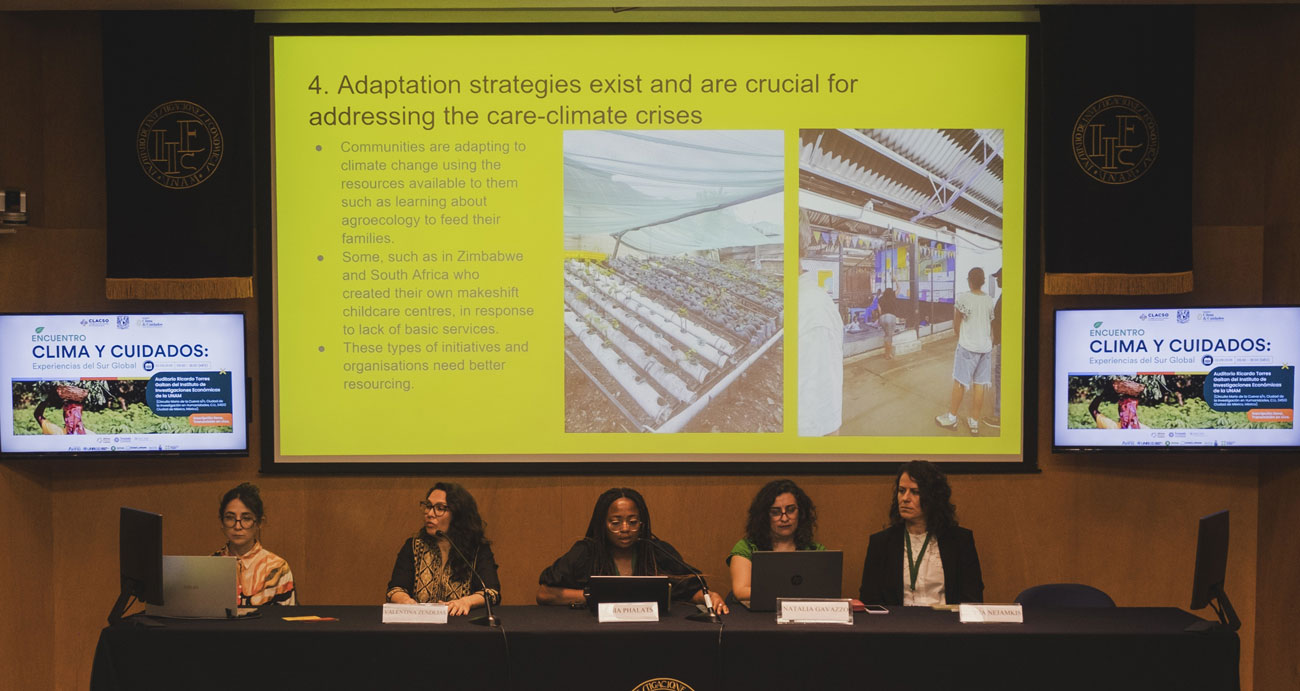
The exchange confirmed that communities, especially women and grassroots organizations, are already developing everyday responses to climate impacts through support networks, community practices, and care systems that sustain life. This underscores that care constitutes a fundamental social infrastructure for confronting the effects of climate change and strengthening communities’ adaptive capacity and resilience.
Among the main consensus points reached during the meeting, the organizations agreed that care systems are essential to climate strategies, and that strengthening them requires guaranteeing decent work, labor rights, collective representation, and recognition of the contributions of Indigenous peoples, local communities, and caregivers. They also noted that the sustainability of these systems depends on their being conceived from a human rights and social justice approach.
Another shared call was the need to transform how climate responses are financed. The participating organizations emphasized that climate financing must be more direct, accessible, and appropriate for the countries and communities most affected by the crisis, avoiding mechanisms that deepen debt. In this context, they stressed that investing in care systems is a necessary economic strategy to sustain life, strengthen adaptation, and support low-carbon development models.
The discussions also highlighted the importance of mainstreaming care into climate policies, with emphasis on Nationally Determined Contributions (NDCs), National Adaptation Plans, disaster risk management, social protection systems, and climate financing frameworks. The organizations stressed that this integration must translate into verifiable goals, indicators, and mechanisms to measure concrete progress.
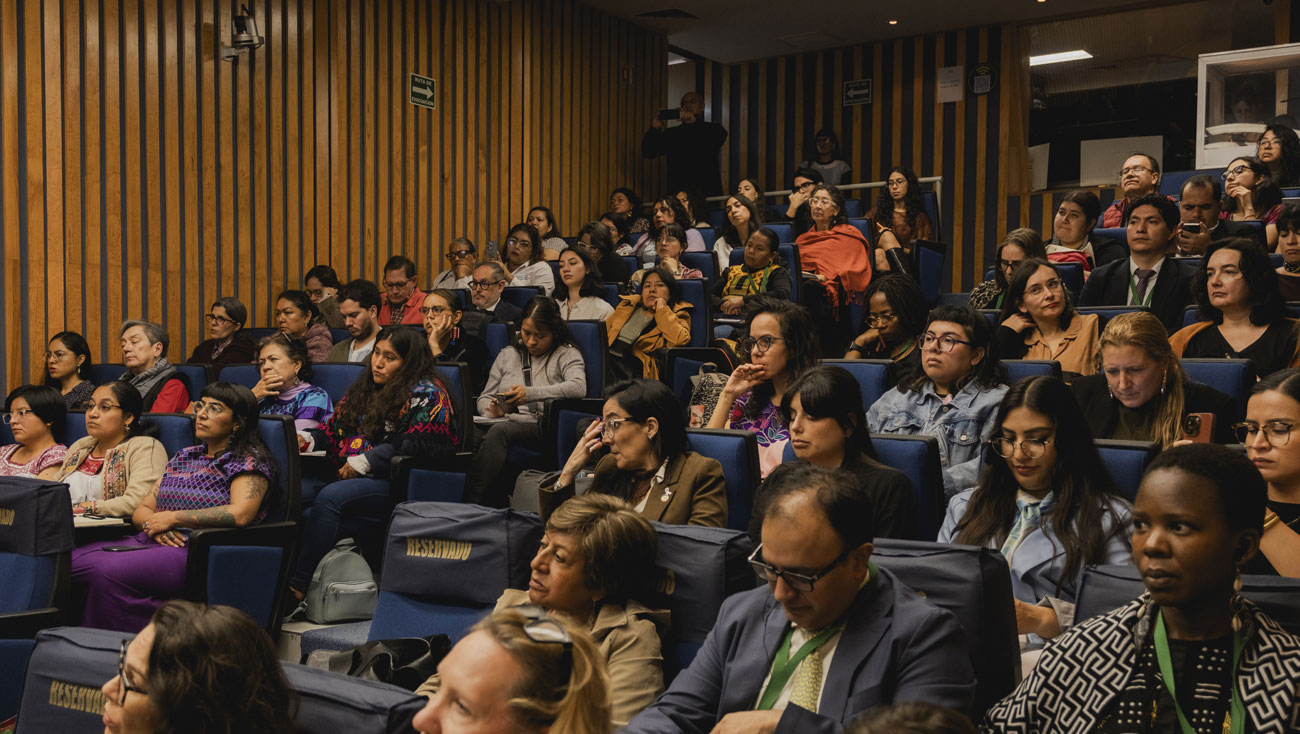
Finally, the meeting reaffirmed that any transition toward more sustainable societies requires recognizing, reducing, and redistributing care work, as well as ensuring its remuneration, collective representation, and investment in care infrastructure. Participants agreed that placing care at the center of climate policies is not only a matter of gender equality, but an indispensable condition for the sustainability of life and the building of more just futures.
“It’s fundamental because women and girls around the world carry out hundreds of thousands of hours related to caring for people at home and caring for the environment. But above all, they are essential for confronting climate change, both for adaptation and mitigation.” — Lorena Aguilar, Executive Director of the Institute for the Empowerment of Women and Girls at Binghamton University
In addition to sharing results and lessons learned, the meeting made it possible to advance the construction of a collective advocacy strategy that will strengthen coordination among organizations, academia, and international actors, with the aim of positioning the climate and care agenda in global and regional decision-making spaces.