Through the Institutional Strengthening Program (PFI), Fundación Avina held, on August 31, the webinar “Solid Foundations for Challenging Times,” a space organized by the Administration and Finance team and designed for partner organizations. The meeting aimed to discuss how to be supported and prepared to respond to current challenges.
More than 100 participants attended the session online, representing different organizations and countries across the region. 40 partner organizations from 14 countries were invited: Argentina, Bolivia, Brazil, Chile, Ecuador, Spain, Guatemala, Madagascar, Mexico, Panama, Uganda, Uruguay, Venezuela, and Zambia. The participating organizations are Fundación Avina partners that currently have active projects and were selected based on responses to the Institutional Form on the foundation’s Partners Portal.
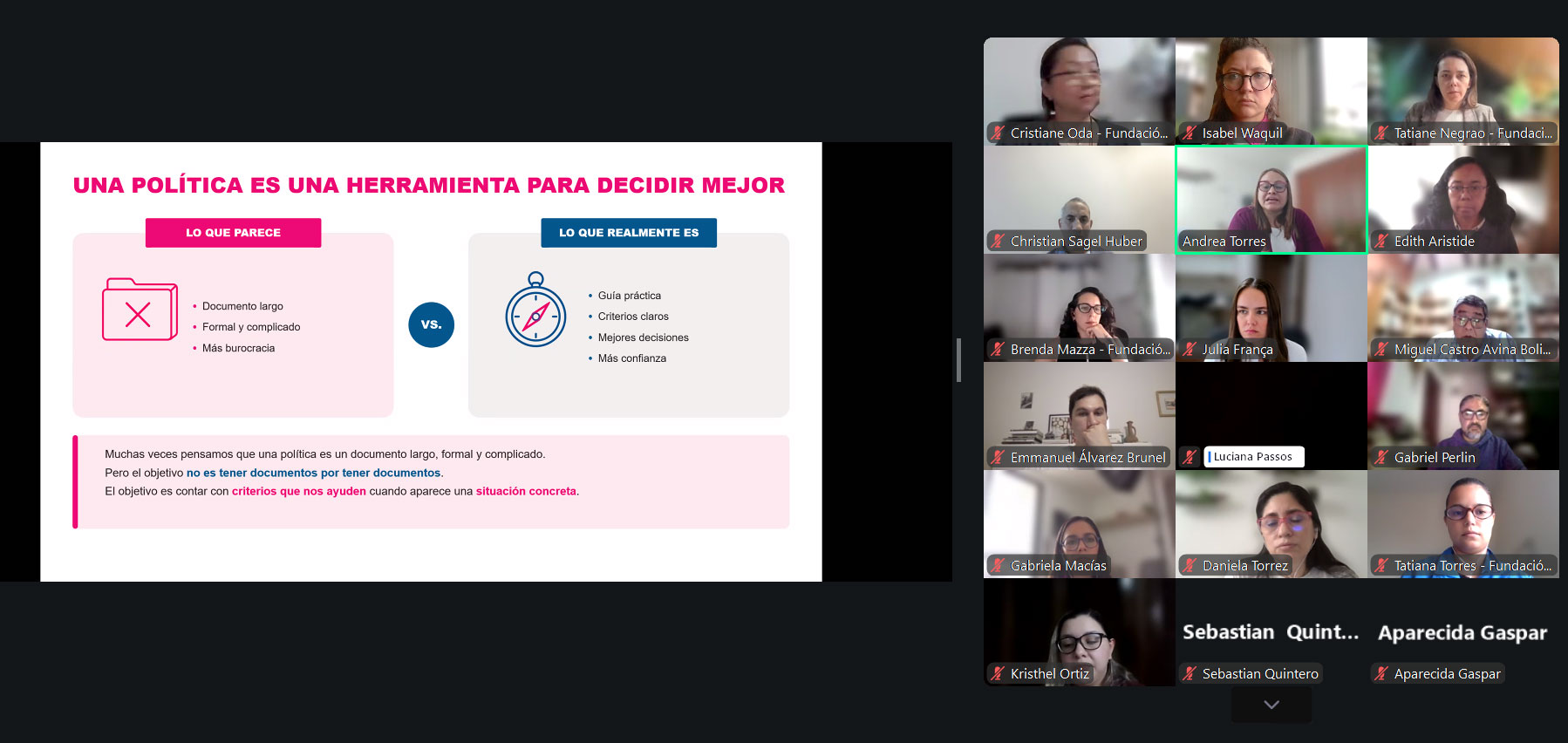
“This diversity of contexts and territories enriches the conversation and invites us to see institutional strengthening as a shared need, although expressed in different ways, according to the reality of each organization,” commented Cintia Vetromile, Fundación Avina’s Administration and Finance Manager.
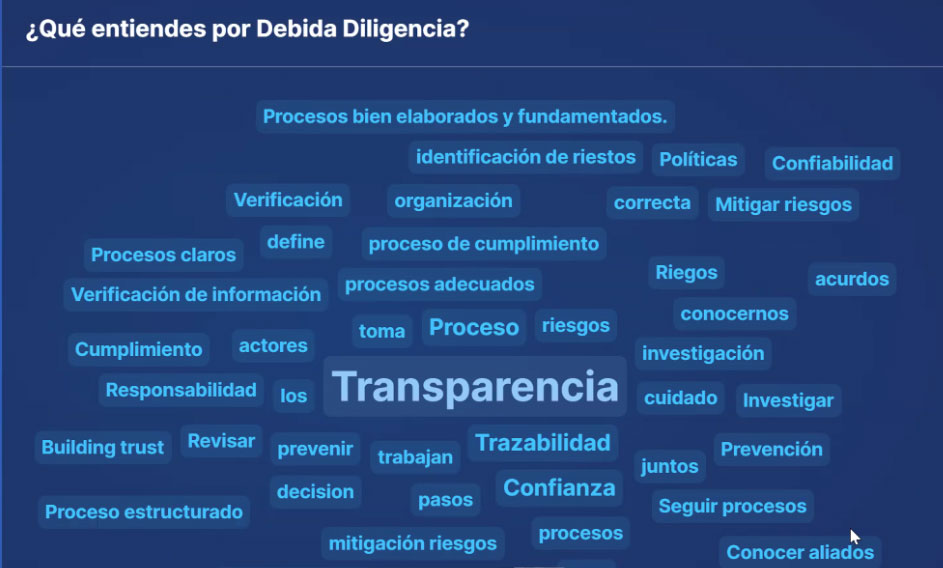
During the meeting, topics such as legal documentation, internal policies, due diligence, procurement, receipt of funds, traceability, and documentary support were addressed. These are fundamental dimensions for sustaining impact, safeguarding trust, and strengthening organizations’ social capital.
Participants also shared their perspectives. A representative from an Ecuadorian association commented that working with different organizations helps structure internal processes: “You have to understand that there is a process, which can be laborious, but which allows us to have traceability and even make decisions.”
The challenge of informality and documentation support was also shared by other organizations. A participant from an organization working in rural areas reported: “In many cases, it’s hard to get invoices, purchase receipts. We work out in the countryside.” Meanwhile, a Mexican partner reported the need to often find alternative ways to ensure transparency. “It’s important to have a framework that guides and orients the organization,” she emphasized.
The webinar sought precisely to offer tools and reflections so that partner organizations can face challenging times with greater security, transparency, and sustainability. When an organization has clearer institutional foundations, it can better show what it does, how it cares for the resources it receives, and how it builds relationships of trust with communities, funders, partners, and networks. In this sense, good institutional management does not replace the mission or territorial work: it protects, sustains, and strengthens them.