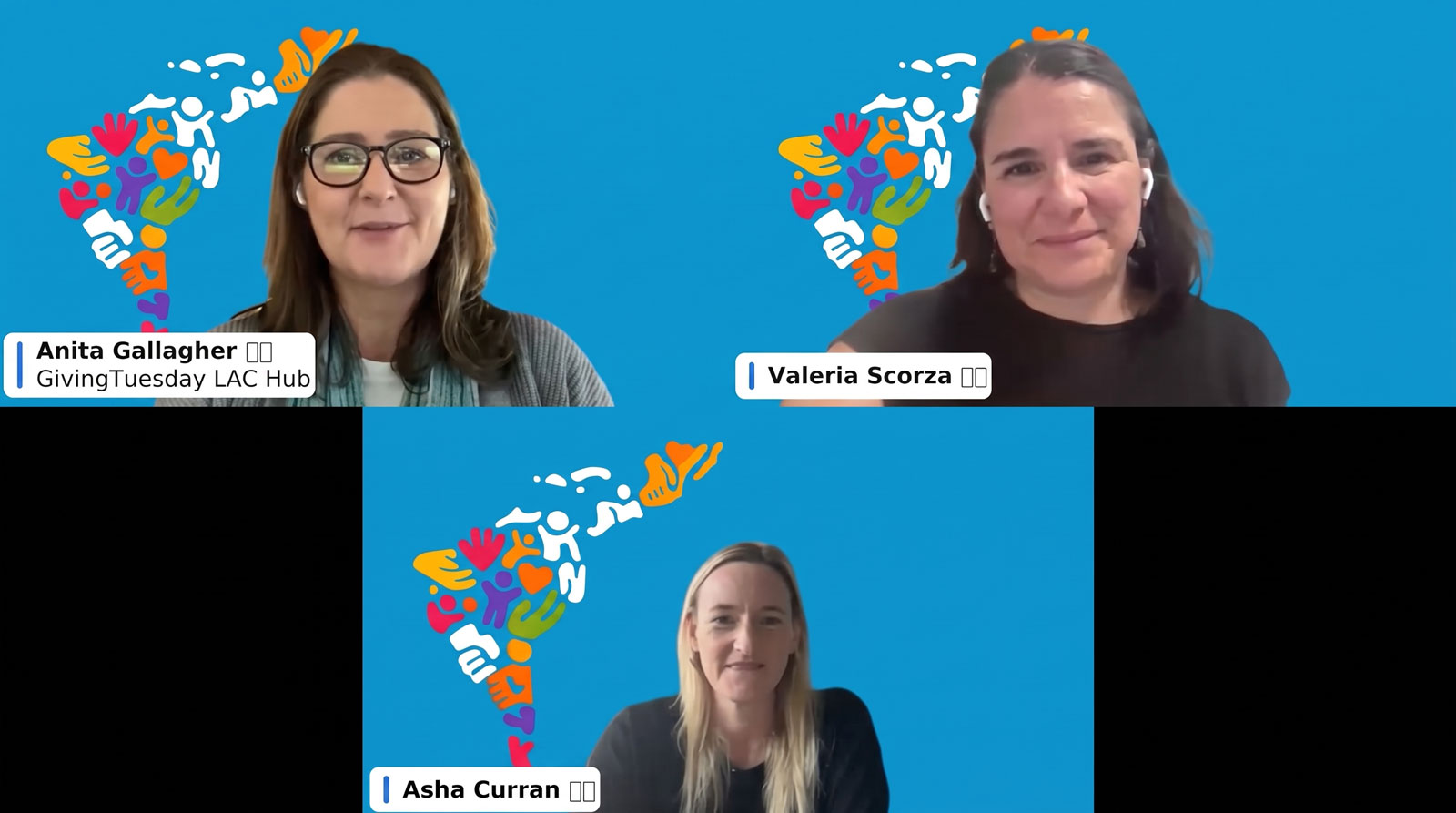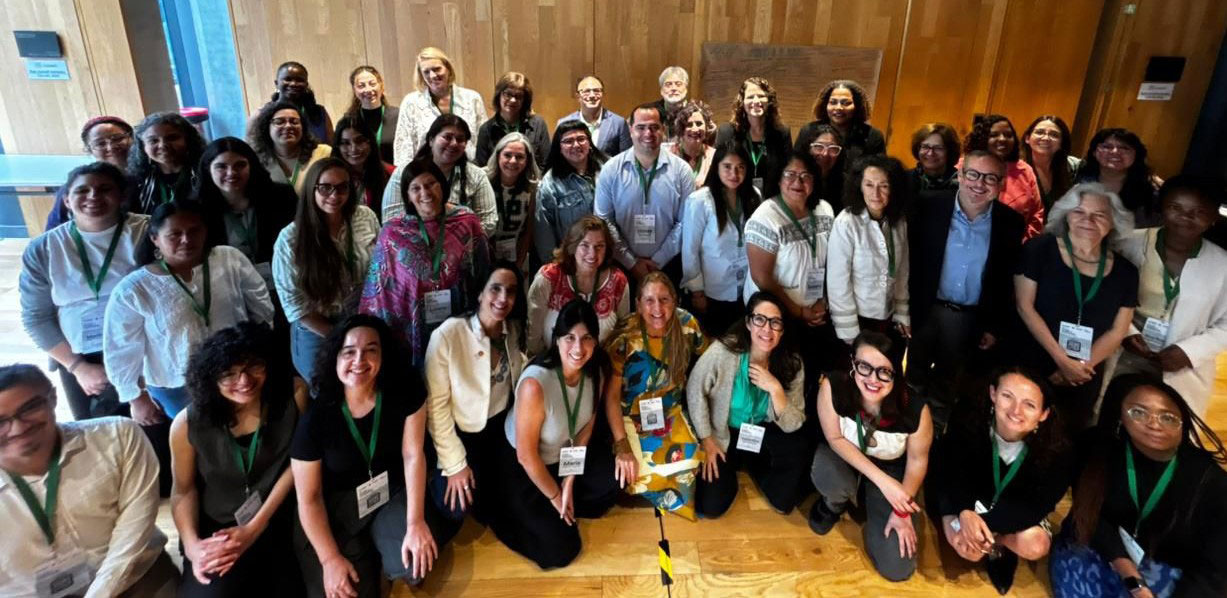
On Tuesday, August 25th, our CEO, Valeria Scorza, took part in Generosity Without Borders, one of the leading gatherings on the culture of giving in Latin America and the Caribbean, organized by GivingTuesday. The virtual event brought together civil society organizations, foundations, universities, companies, and leaders working to promote generosity and social impact across the region.
Valeria participated in the closing plenary, titled “Abundance instead of scarcity, the future of philanthropy,” alongside Asha Curran, CEO of GivingTuesday. The conversation began from a shared diagnosis: the social sector is going through a period of shrinking resources and pressure on civic space, but the response to this scenario doesn’t have to be based solely on a narrative of scarcity.
“We are living through a moment of scarcity, and that is real. Resources are shrinking and civic space is under pressure. Organizations and communities are being called to respond to an increasingly uncertain scenario, with fewer resources. That is our reality, and we shouldn’t minimize it. But we also need to be careful, because we cannot allow scarcity to become the only story we tell about ourselves and about the future we want to build,” Scorza noted.
For Valeria, Latin America is also a region of extraordinary abundance — of knowledge, creativity, solidarity, trust-based relationships, and community organizing capacity. One example of this ability to build through connection is MapBiomas, a collaborative network that combines satellite technology, scientific knowledge, and local knowledge to produce open environmental data and maps. What began as a group of organizations bringing together science, technology, local knowledge, and trust-based relationships grew into a collaborative network with more than 250 organizations and over 75 scientists, across 17 countries of the Global South. Together, they produce shared environmental intelligence that helps protect forests, manage natural resources, and support better decision-making, generating information that none of the organizations could produce alone. Fundación Avina supported the network’s initial articulation and today works in partnership to expand the project to various countries across the Global South.
“To me, that is abundance. It’s not abundance because one institution has everything it needs, but because, when we connect what we have, new possibilities can emerge. That’s why imagination matters. In difficult times, imagination is not a luxury — it’s part of how we build the future,” she said.
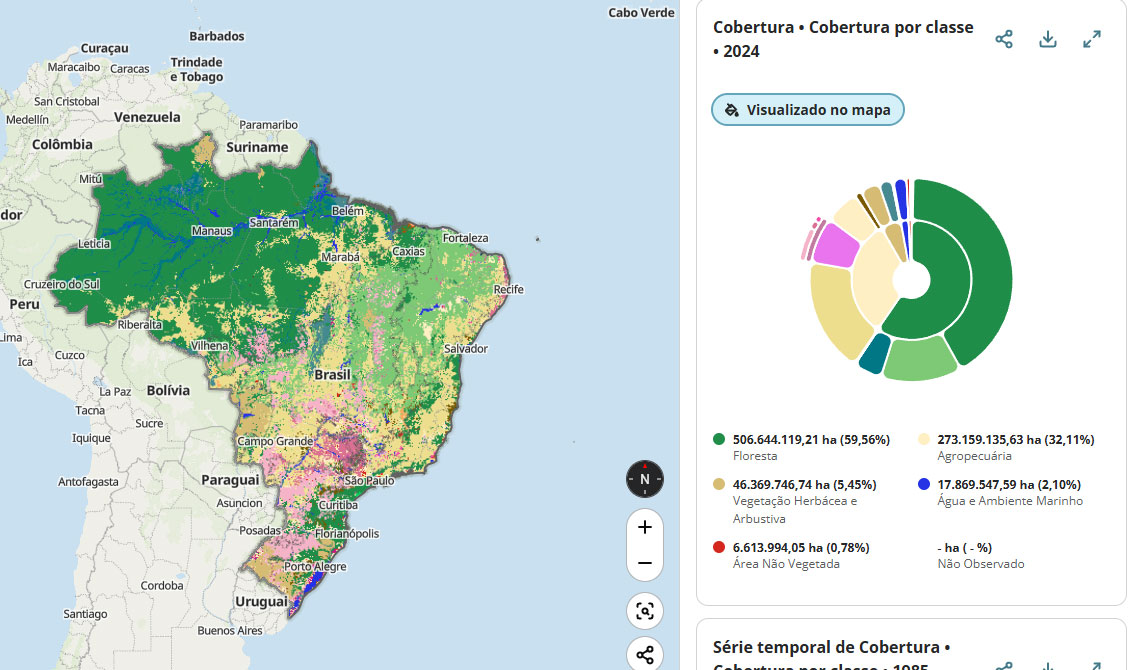
MapBiomas is a multi-institutional network that produces annual land cover and land use maps.
Philanthropy, democracy, and the power of networks
The conversation also addressed the relationship between philanthropy, participation, and democracy. For Valeria, the way resources are distributed influences who participates, who has a voice, which forms of knowledge are valued, and who sets priorities and makes decisions. “Funding architectures also shape power relations, and that’s where generosity connects deeply with democracy,” she said.
In this context, Scorza argued for the need to move beyond a vision of resilience based solely on organizations’ survival, and to instead think about a civic space with vitality, capable of imagining, organizing, and shaping the future. “Vitality doesn’t come simply from making each organization individually stronger — it comes from strengthening the fabric that connects us,” she emphasized.
The recent work Avina carried out with RACI offers, according to Valeria, evidence of this dynamic. In a study of 73 civil society collective spaces across 34 countries, two-thirds reported having faced budget cuts. Even so, one of the most frequent responses was not isolation, but rather the pursuit of stronger alliances, networks, and collective spaces — creating conditions for organizations to reinvent themselves, rethink how they operate, and reorganize.
For Asha Curran, this capacity for connection also involves broadening the very definition of generosity. Over nearly 15 years following GivingTuesday movements around the world, she has observed that generosity often shows up in spaces we don’t usually measure or even recognize as giving.
“So abundance isn’t only about finding more resources — it’s also a shift in mindset. It’s about finally seeing the resources, relationships, creativity, and everyday generosity that were already there all along, and then building the infrastructure needed to connect them,” she remarked.
This is precisely where Asha’s and Valeria’s contributions converged. In today’s context of simultaneous challenges, abundance means recognizing and connecting the resources, knowledge, relationships, and capacities that already exist.